
“Virgi!”
Xiomara’s voice breaks through the morning air. I see her shadow appear in the doorway, illuminated by the kitchen light like the divine presence Our Lady of Guadalupe herself. Her chanclas slap against the tile floor as she makes her way to the bed, and I bury myself deeper under the sheets with a groan.
It’s no use. She reaches under the mosquito net, throwing aside the three layers of blankets she’d buried me under the night before.
“Vamos!” She’s already dressed – jeans, a jacket, a wide-brimmed hat for the still-nonexistent sun. She kicks off her chanclas, begins lacing up her boots. “Unless you want to keep sleeping, querida.”
My body wants nothing more than to keep sleeping. The clock reads 4:22 AM, the second-day in a row I’m awake long before the crack of dawn. Moonlight pours through the window but the sun won’t make an appearance for hours. But once again, sleep can wait.
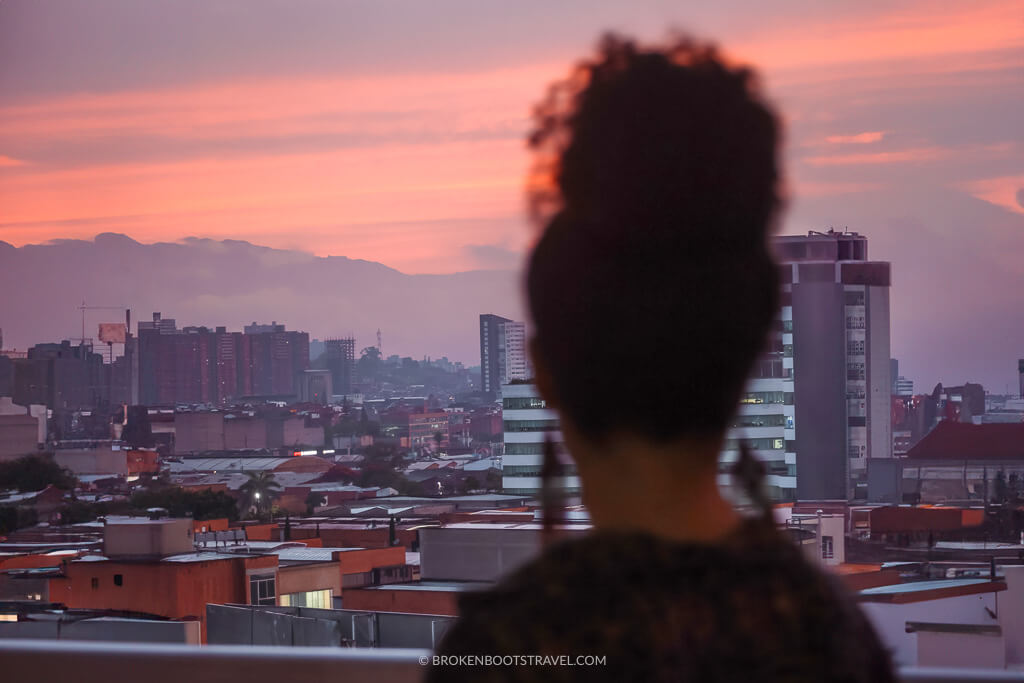
We’d watched the sun rise the day before as well. Xiomara had woken me up long before the first rays hit the city, loading backpacks full of clothes and gifts and snacks for the journey. We’d lugged the heavy packs to the bus stop, then watched the sun rise over the Medellín skyline as our bus wound its way into the mountains.
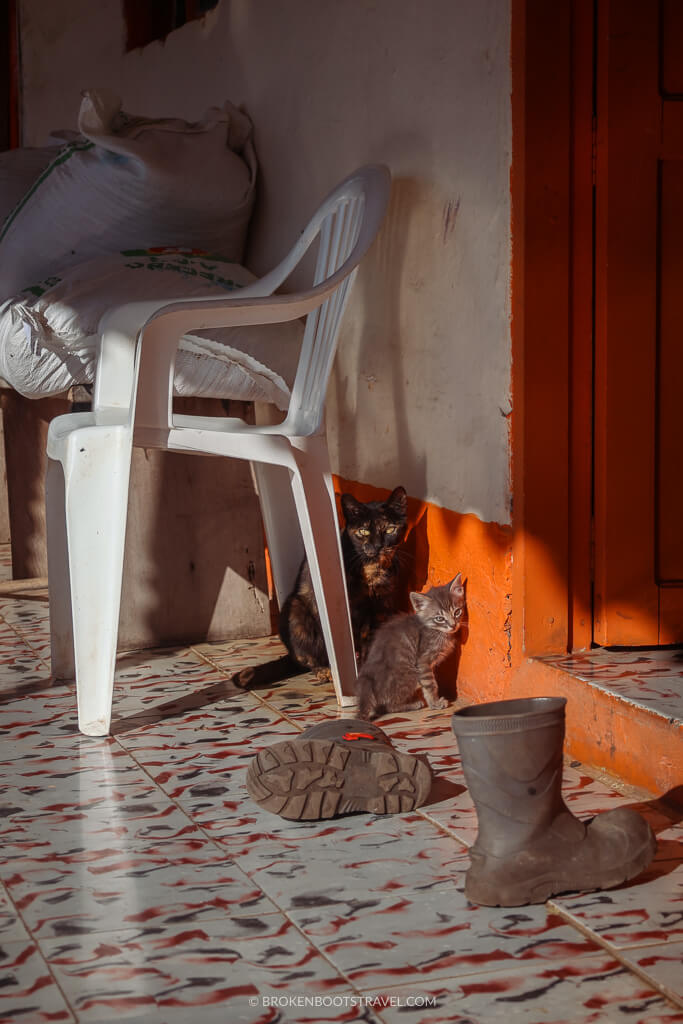
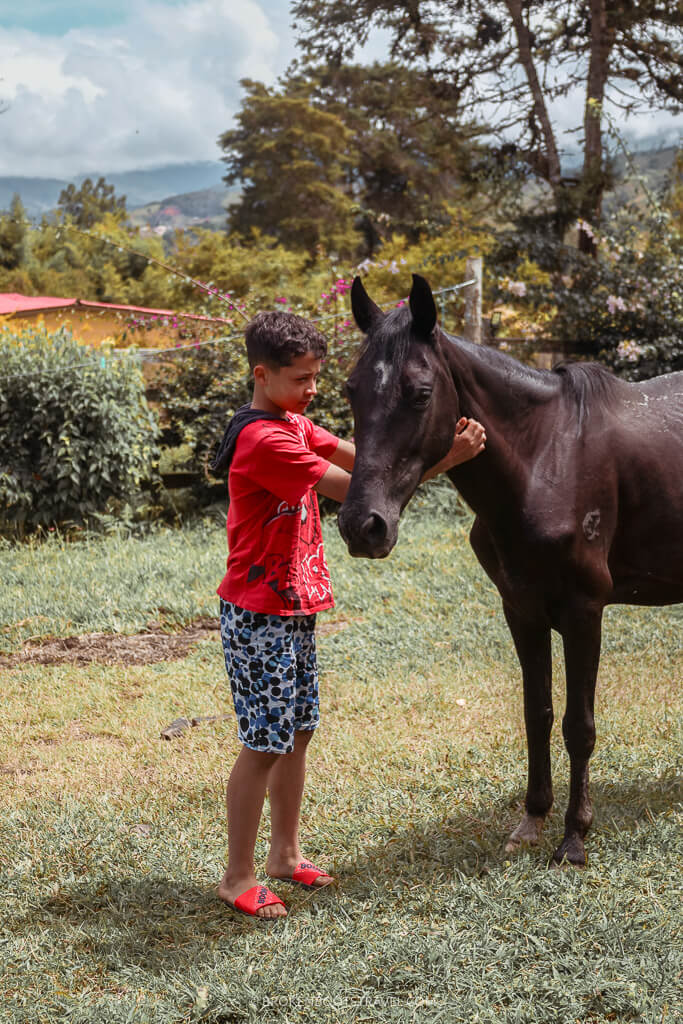
Six hours later, the bus had dropped us at an intersection deep in the Andes. To our right, the road led into the town of Urrao, a small pueblo maintained by the surrounding coffee farms, its residents clad in traditional aguadeño hats and heavy rubber boots. We were far off the gringo trail, even more so as we began the walk uphill from the bus stop to the Xiomara’s family finca. The country home was built in the traditional style – whitewashed walls lined with orange trim, a portrait of el campo colombiano straight out of a picture book. The image was completed with a grazing mule in the front yard, and a pen filled with, Xiomara made sure to note, exactly 953 laying hens.
Later, as we sat on the porch sipping hot chocolate, Xiomara pointed to a mountain across the valley. From where we sat, the landscape sloped downwards, following the meandering Penderisco River into the colorful town of Urrao. The river continued it’s journey through the colorful buildings and colonial streets until it suddenly changed direction, it’s path obstructed by the towering green mountain.
“Tomorrow morning we’ll climb to the top, it’s the best place to see the sunrise.” She passed me a saltine, dunking one of her own in her cup of hot chocolate. “But eat up my love, we’ll need the energy.”
I could certainly use the energy now. But the chilly morning air is beginning to seep into my skin, willing me out of bed against all my inner wishes. Luckily, I’ve laid out my clothes the night before – thick socks, hiking boots, and a sweater I quickly throw on to minimize any exposure to the cold. Regardless, a shudder runs through me, so I pop on a knit hat for good measure.
We tiptoe out of the house, careful not to wake Xiomara’s sleeping family. As we make our way through the yard, I can hear the soft clucks of a few of the hens, probably the only other creatures awake at this ungodly hour. But my assumption is refuted as we make out way into the valley – for many in Urrao, the day has already begun. Shop doors are open, their owners selling piping hot cups of tinto. Coffee farmers sit outside, mugs of the sugary coffee gripped in their palms. As we walk down the main road, a colorful Chiva drives by, it’s neon lights and blasting music temporarily interrupting the peace of the early morning.
On the far side of town, the path up the mountain begins with simple wooden bridge hung over the river. Xiomara and I chat away, until our conversation is interrupted by a strong gust of wind sweeping through the valley. We both grab onto the railing as the bridge sways – erupting into a fit of giggles that pushes the last bit of sleep out of our systems. It’s a good thing too, because from here the only direction to go is up.
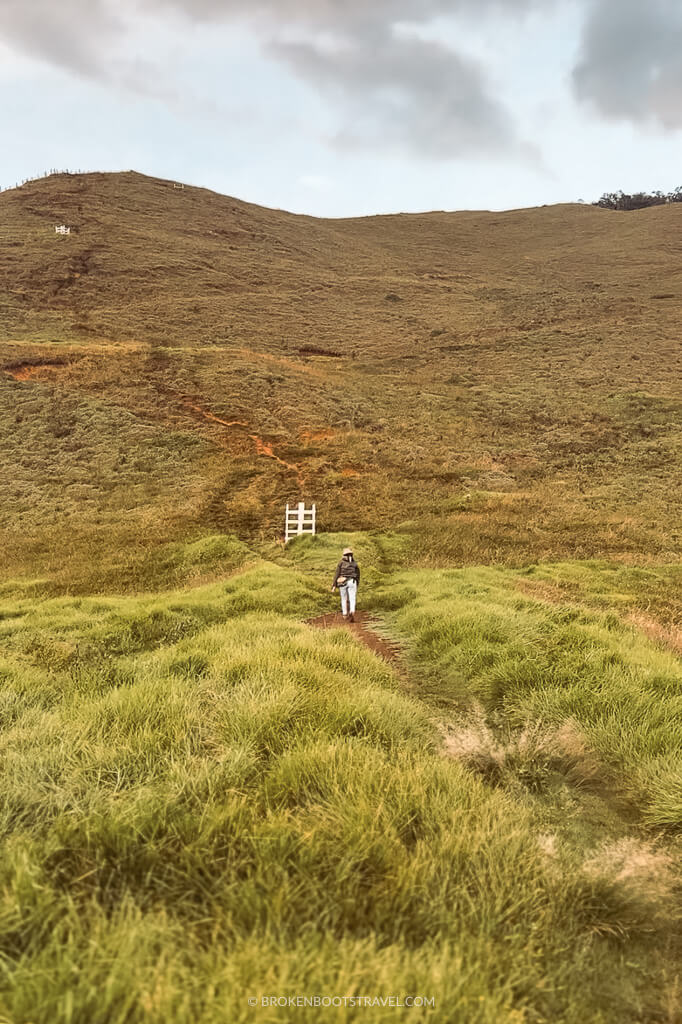
Our conversation slows as we make our way up the path. The trail is steep and our pace is gradual as we carefully avoid stubborn roots and loose rocks below the still-dark sky. The path is marked by Stations of the Cross, a white alter resting beside the trail every 100 meters or so depicting a step of the cruxifiction. Even in the darkness I can make out the next few — Jesus falls once, twice, three times. The path is still too dark, too far to make out the final stations, but I know what’s to come. Jesus is stripped, Jesus is crucified, Jesus dies on the cross.
I can feel the sun beginning to rise behind us, the first rays of morning tickling the exposed skin on my neck. “We need to move faster.” Xiomara is picking up the pace ahead of me, the path passing across a much-need plateau and under a fence meant to keep in the nearby cows. One stands nearby eyeing us auspiciously, almost daring us to enter his territory. I duck under the wooden beam and continue down the path, absentmindedly muttering a gracias as we pass. He snorts in response, keeping his eyes on us as he chews his cud.
The final station is just ahead, up a steep, dusty path. I can make out the wooden white altar box, grander this time with fresh flowers laid at the base. The sun is nearly here now and we race against time, our boots sending clouds of dust behind us as we scramble up the final stretch of the mountain, catching glimpses of the impending sunrise over our shoulders.
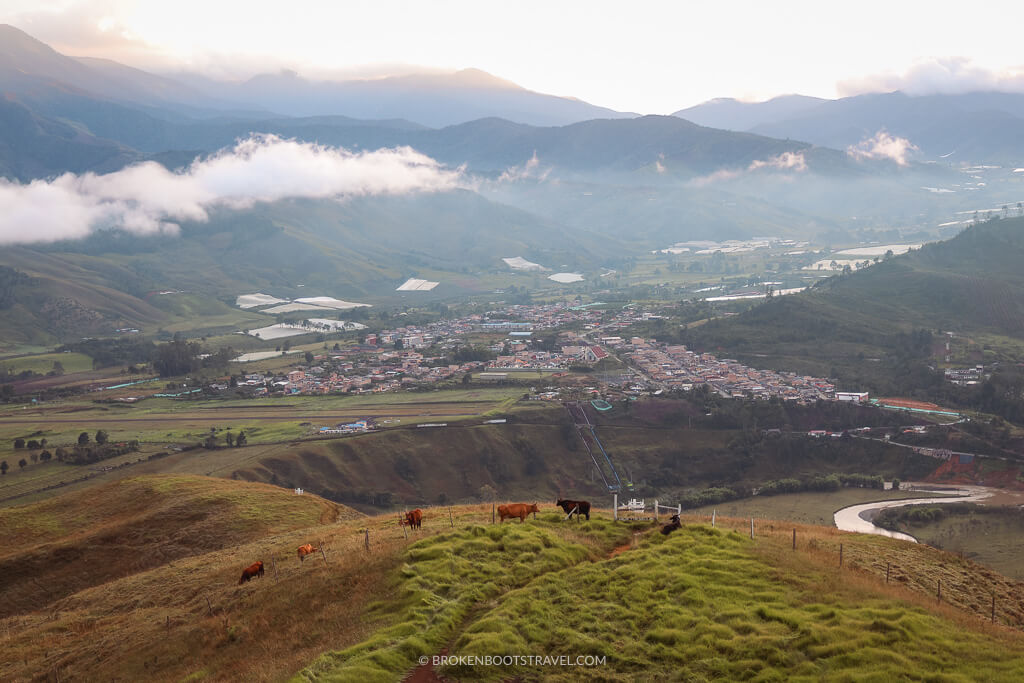
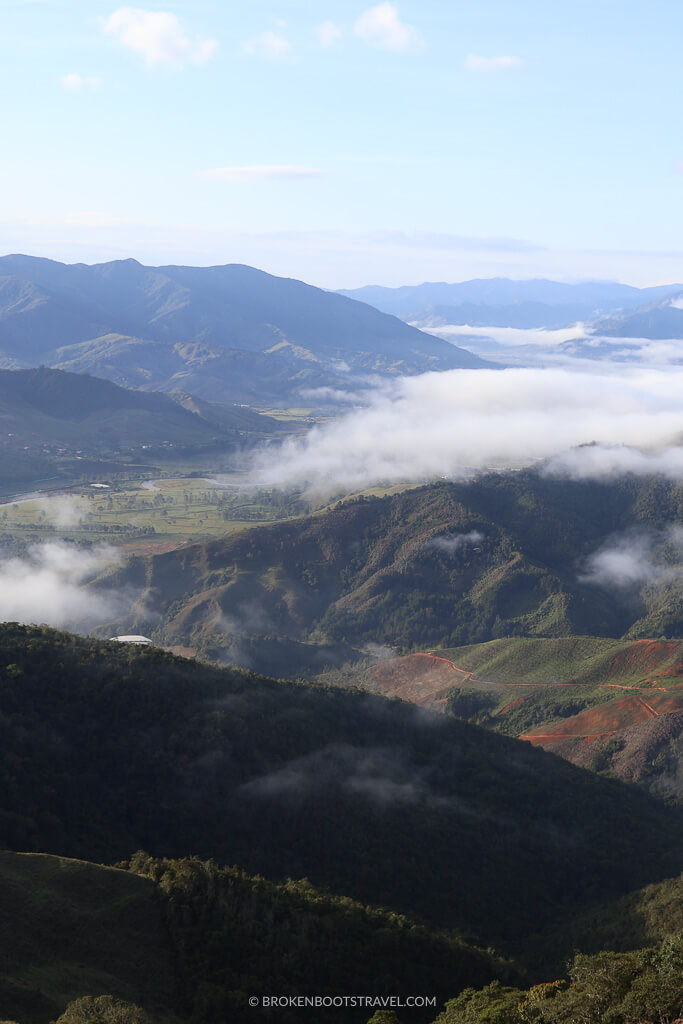
We arrive just in time. The valley fills with light as we reach the final station and we turn, taking in the view below us. The tiled roofs and colonial steeples of Urrao appear as tiny as toys, the sunlight reflecting off the river like a divine presence. Clouds seep in to the valley and we watch as they gather below us, temporarily obscuring pieces of the picture and revealing others.
Beside us, the final station glows in the morning light. The image depicts the ultimate scene – the open tomb, sunlight spilling into the darkness as Jesus is laid to rest by the ones he loves.
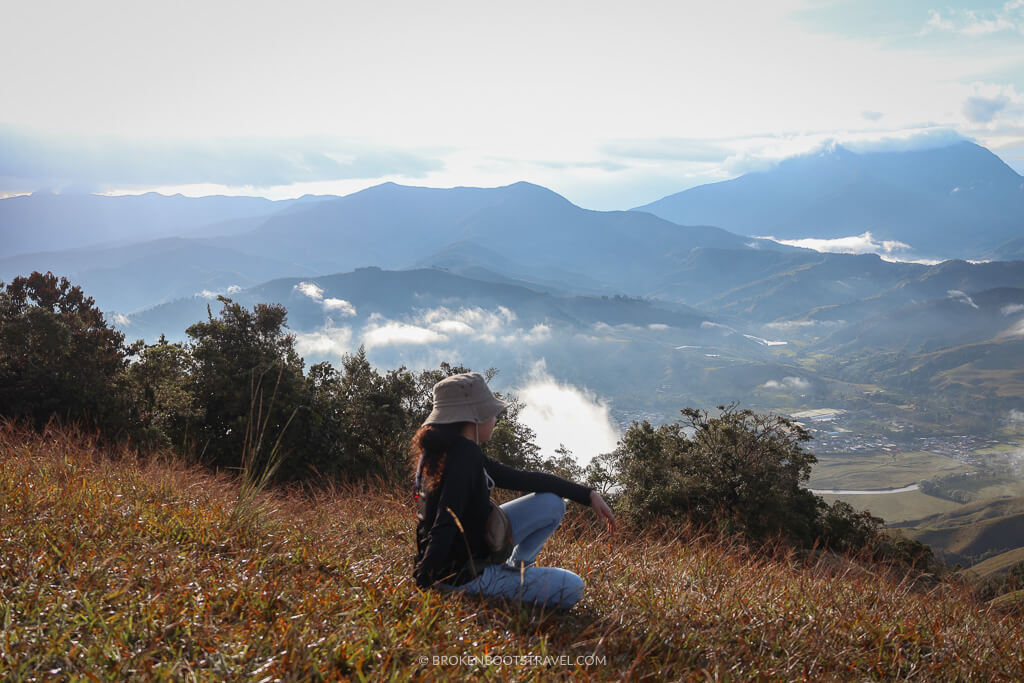
Xiomara takes a few steps forward before collapsing in the grass, unbothered by the morning dew. I watched her body relax as she takes in the view – her shoulders softening, her hair catching a light breeze. She turns back to me, smiling.
“Come Virgi!” She looks like an angel, haloed by the sun behind her. “Come look!”
I wander over to sit beside her, plopping down in the wet grass. For a moment, we sit in silence, watching the clouds drift in and out, feeling the condensation on our fingertips, listening to nothing but our own steady breathing. Finally, Xiomara looks at me.
“It was worth the early morning, don’t you agree?” She smiles, the warm sunshine painting her golden. She leans up against me, placing her head on my shoulder. “I’m so glad you came querida.”
“Me too.” I look out over the valley, the shifting, misty clouds, the teacup-sized houses, the rolling hills as far as the eye can see. And then I lay my own head on Xiomara’s, resting beside someone I love.
LOOKING FOR MORE STORIES?
Looking for more? Click here to find all travel stories from Broken Boots Travel.
Love stories? Subscribe to my newsletter to get my latest updates delivered straight to your inbox every month. One email a month + no spam? Sign me up!

Virginia Taylor (Ginna) is a travel writer and photographer exploring the world until her boots wear through. She’s currently on a mission to explore all 32 departments of Colombia, though she formerly called the Middle East home. Want to know more? Visit the About Page.