
When I tell my gringo friends I love Colombian food, I’m often met with curiosity. Is it just rice and beans? Is it spicy? All I know are arepas!
The truth is, Colombian food can’t be easily generalized. As the second-most biodiverse country in the world, Colombian food varies greatly based on distinct regional flavors and ingredients. Not to mention, you have multiple cultural influences at play – we’re talking everything from Indigenous to Spanish to African flavors!
Now while you most certainly won’t find the same food on the Caribbean Coast as you’ll find deep in the Andes Mountains, I’ve put together this guide of must-try Colombian dishes to help you know what to try, no matter where you are in the country. From arepas to buñuelos to the world’s best coffee, it’s hard to go wrong – so let’s dive in.
This site uses affiliate links to share products that I use and love! If you click on one of the links I may receive a small commission at no additional cost to you. This helps keep my site up and running — thank you!
Colombia Quick Links
✈️ Flights – Use Kiwi.com or WayAway to find the cheapest and fastest flights to Colombia
🛏️ Accommodation – Find the best places to stay throughout Colombia on Booking.com and Hostelworld.com
✅ Get Insured – I personally use Safety Wing Nomad Insurance for my travels all around the world! VisitorsCoverage is another great option.
🚗 Rent a Car – Find the best deals for a Colombia road trip on RentalCars.com
🗺️ Find Things to Do – Check out Get Your Guide, Viator, and Tripadvisor for exciting adventures all around Colombia
☎ Buy a Sim – Airalo offers eSIMS for over 200 countries and regions
Planning to spend more time in Colombia? Check out my full three-week itinerary!
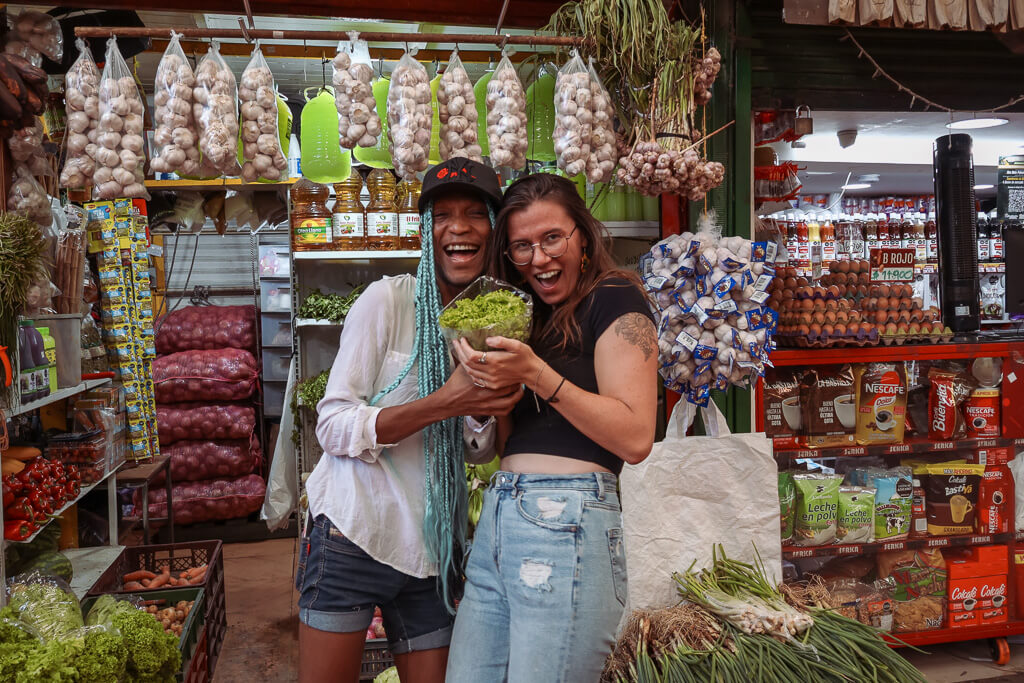
Featured Food Tours in Colombia
Don’t want to DIY? Check out some of these guided food tours throughout Colombia to experience the best flavors of the country, or keep reading for a regional breakdown of dishes and tours to try!
🌃 BOGOTA – Guided Food Tour with 12+ Tastings
🍃 MEDELLÍN – Guided Exotic Fruits Tour in Plaza Minorista
🏝️ CARTAGENA – Guided Street Food Tour with Locals
💃 CALI – Cali’s Local Food Tour at Alameda Market
Unsure what to bring with you to Colombia? Check out my ultimate Colombia packing list!
Traditional Colombian Dishes
There’s continued debate about what is the “official” national dish of Colombia – after all, it all depends on the region! However, there are some dishes you’ll find in nearly every corner of the country, gastronomic staples that are the core of Colombian cuisine. Here are some traditional dishes you can’t-miss in Colombia.
1. Bandeja Paisa

Originating from the department of Antioquia and Colombian coffee region, bandeja paisa is considered by most to be the national dish of Colombia. This hearty dish combines a number of regional flavors onto one plate, in fact bandeja paisa quite literally translates to “the paisa platter!”
The dish combines red beans, rice, chicharrón (deep fried pork belly), plantain, avocado, beef, and an arepa, all topped off with a perfect fried egg. On more traditional platters, you’ll also receive a morcilla, or blood sausage, though this is less common in restaurants aimed at tourists.
You can find bandeja paisa at nearly every restaurant in Colombia, though not all bandejas are created equal! My favorite bandeja paisa I ever ate was at the food hall in the town of Salento, Quindío, made in a bare bones kitchen by an old woman who’d been whipping up bandeja paisa for decades! I recommend keeping your eye out for a spot where locals eat – there you’ll find more authentic, and economic, bandeja paisa.
2. Ajiaco
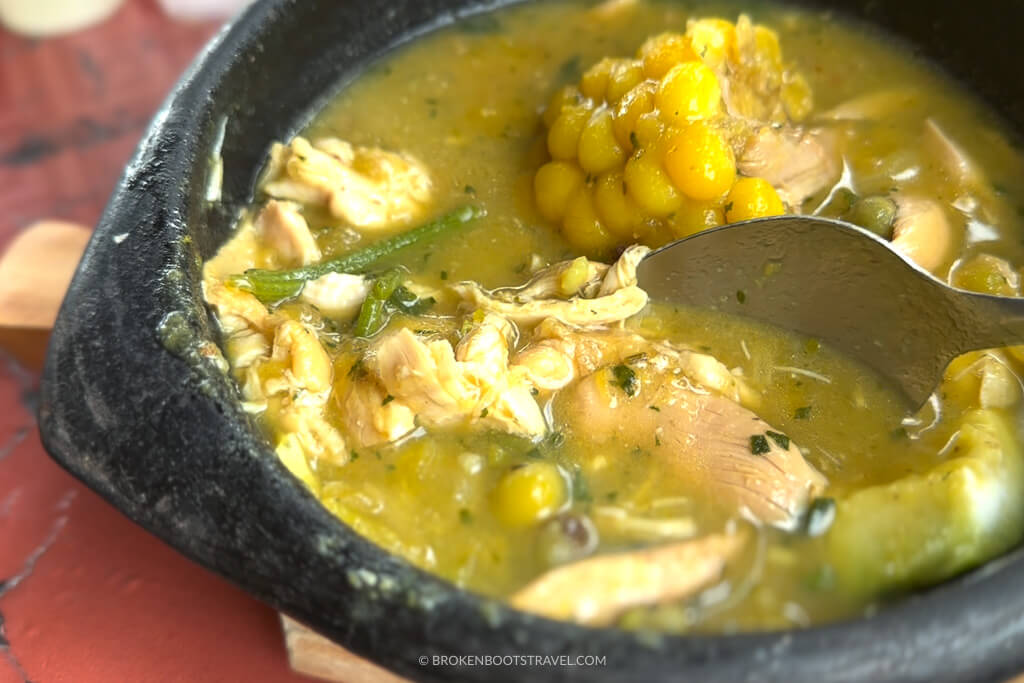
No food is more representative of Colombia’s Andean region than Ajiaco, a hearty, savory soup perfect for the chilly weather in the high Andes. Made with a base of chicken and potatoes, the stew is then topped with salty capers, corn on the cob, avocado, and fresh cream. It’s about the most cozy meal you can imagine, and a local favorite!
You’ll find Ajiaco sold in nearly every restaurant in Colombia’s capital city of Bogotá, though the best ajiaco in town is served up at Mercado la Perservancia. This traditional market is a great place to try the local ajiaco, ajiaco santanferaño, as well as experience a true local side of the bustling city.
While ajiaco is typically an Andean dish, you’ll still find the soup served across the country. You might even spot it as a starter in a menú del día, or a traditional set lunch menu!
3. Lechona
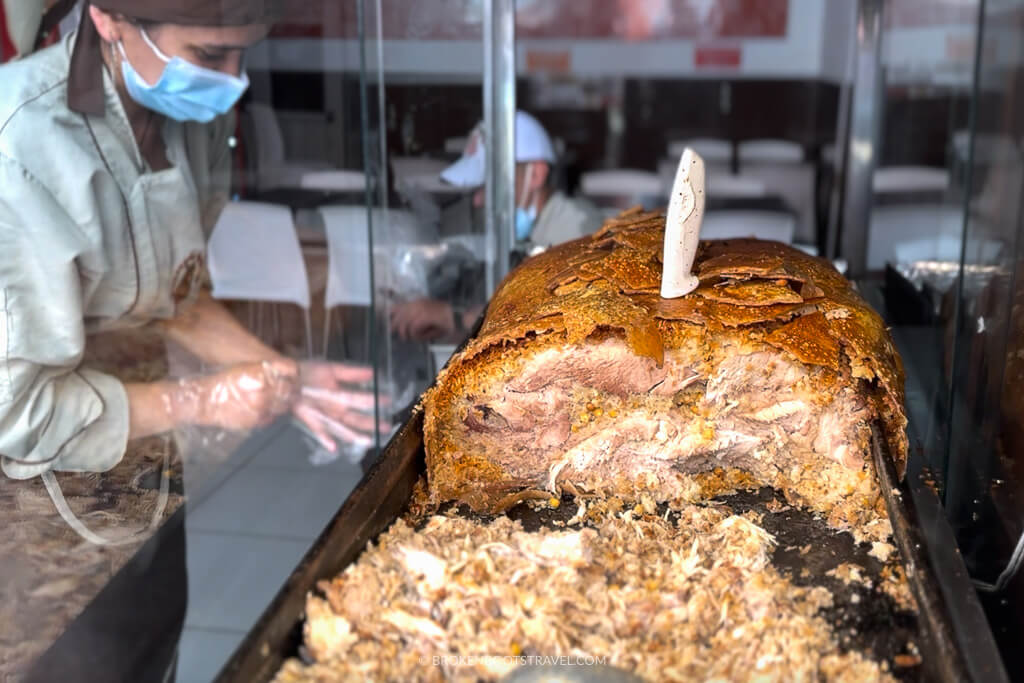
While lechona is typically considered a Colombian Christmas dish, you’ll spot the dish at celebrations throughout the country year-round. The dish is truly a showstopper – a roasted sucking pig, stuffed with a mixture of rice, onions, and spices.
The preparation of the dish can take days at a time, with the pig marinated in spices then stuffed with the rice mixture. Next, the entire pig is roasted in a hot oven so the skin becomes crispy. Finally, the pig is served on a large platter, shared amongst family and friends.
While lechona is typically associated with family gatherings, you’ll see plenty of street vendors serving it up in the street, especially around the holiday season. Make sure to ask for extra crispy skin on your plate, it’s truly the best part!
4. Tamales
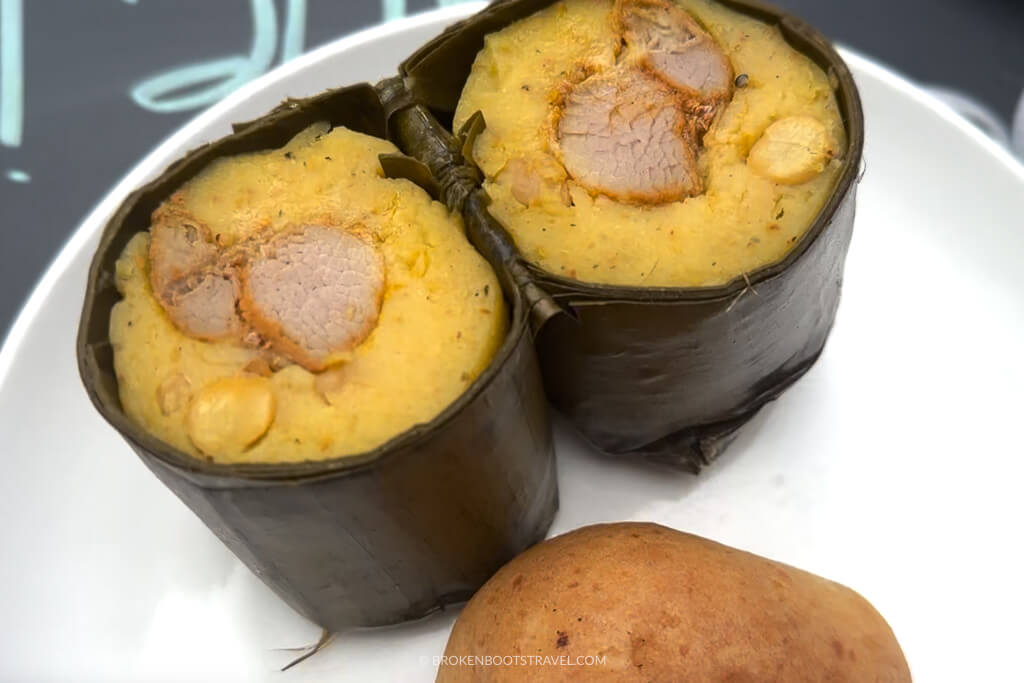
Tamales are a staple throughout Colombia, though each region has their own unique take on the dish. In essence, they’re a corn cake wrapped in a banana leaf, often stuffed with meat or veggies and steamed until cooked through.
Perhaps the most universally known tamales in Colombia are tamales tolimenses from the Andean department of Tolima. Prepared with the traditional corn dough and wrapped in a banana leaf, tamales tolimenses are notable for their addition of carrots, potatoes, and a hard-boiled egg.
Another notable Colombian tamale is tamales llaneros, from the Eastern Plains of Colombia. These tamales are notable for their distinct shape – flattened into a rectangle and often called “hallacas” because of the influence of nearby Venezuela.
5. Sancocho
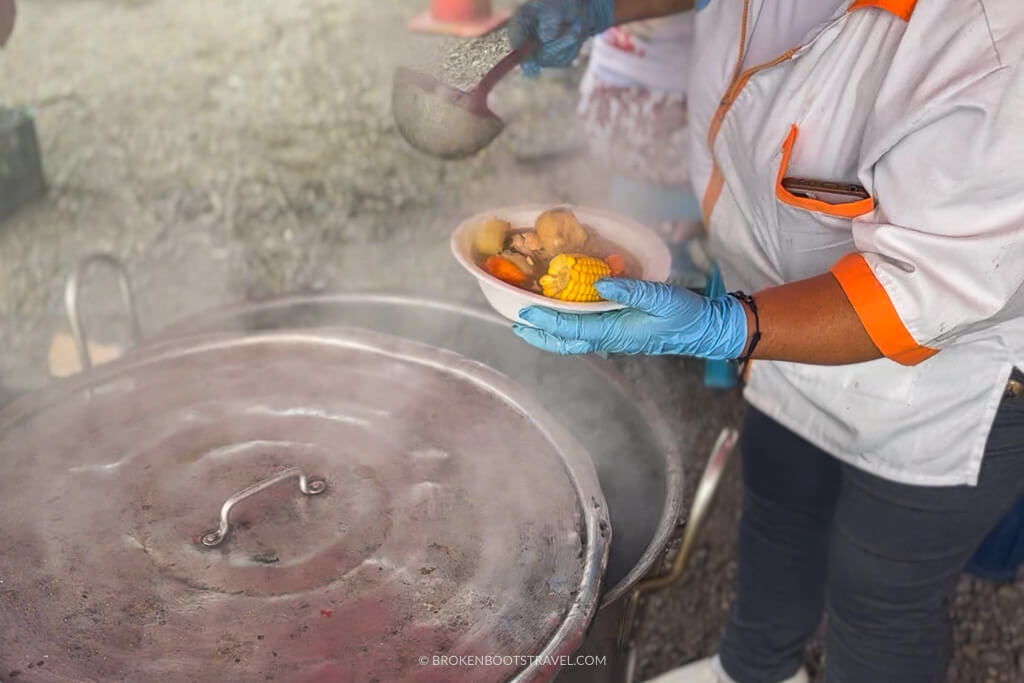
Sancocho is certainly a contender for Colombia’s national dish, a hearty stew you’ll find brewed everywhere from restaurants to street corners! The soup is made of fresh stock (often chicken or beef) and combined with a variety of vegetables and tubers, usually carrots, yuca and potatoes. And in true Colombian style, of course you have to add plantain!
The best sancocho is made at roadside stalls, cooked over an open fire. The soup is usually prepared all day long, allowing the flavors to steep together and become even more delicious. Arrive a little later in the day and you’ll find it to be even more delicious!
You can also find sancocho offered at many restaurants throughout Colombia, even as a part of a menú del día, or set lunch menu. It’s most common to find the stew during celebrations, with people gathered around with huge bowls of the soup. Keep at eye out at celebrations like Barranquilla Carnival or the Vallenato Festival for vendors stirring huge pots of sancocho in the middle of the celebrations!
6. Chicharrón
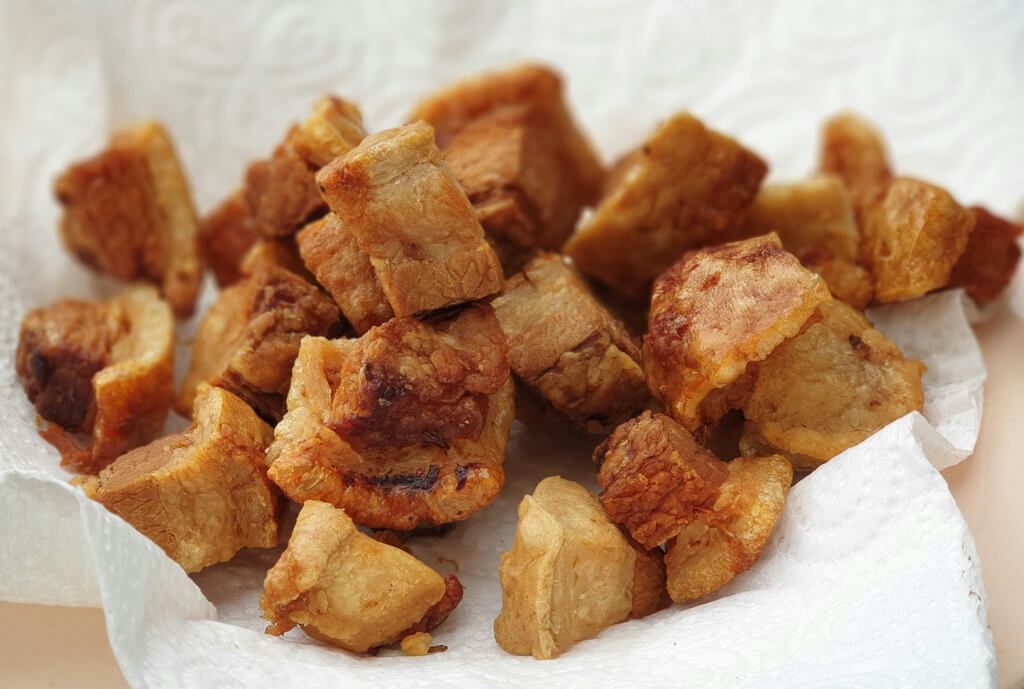
Chicharrón is my favorite Colombian food, a thick-cut, deep-fried strip of pork belly that’s perfectly crispy, greasy, and salty at the same time. You’ll often see it served with a slice of lime for a bit of citrus, or of course as a staple on the iconic bandeja paisa.
Chicharrón looks different throughout Colombia, though it’s equally delicious in all parts! In Antioquia and the coffee region, chicharrón is often sliced thinner, fried, and then cut into bite-sized pieces along the skin for the perfect crispy bite every time. In coastal regions, it’s common to find chicharrón cut thicker and sometimes even served in the delicious mote de queso soup – more on that later!
You can find chicharrón at nearly every restaurant in Colombia, and sometimes even as a part of a set lunch menu! However, my favorite chicharrón is almost always served roadside, fresh out of the fryer!
7. Pescado Frito

The dish perhaps most emblematic of Colombia’s Caribbean Coast, pescado frito, or fried fish, can take many different forms. Regardless of which fish you choose, you’ll find it served with salad, coconut rice, and fresh patacones – deep fried green plantains!
The most common fish you’ll find in pescado frito are tilapia, mojarra, and snapper, though a local favorite is el bocachico, a large freshwater fish often found in the Magdalena River. It’s hard to get fresher fish than you’ll find in Colombia – straight from the water and into the fryer!
Colombian Street Food and Snacks
Colombia is known for its street food – vendors whipping up fresh buñuelos and cheesy arepas roadside at practically all times of day! Sampling the street food is a quintessential part of a visit to Colombia, just keep an eye on your cholesterol!
Love street food? Check out this guided tour of some of the best street food spots in Medellín!
8. Arepas
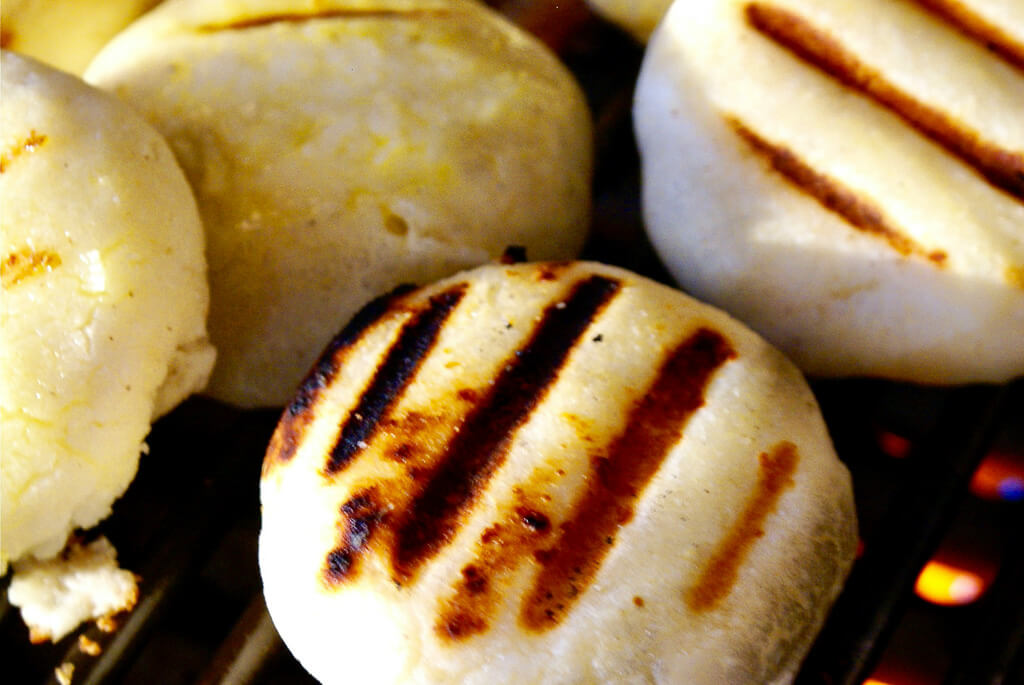
If there’s any dish you have to try in Colombia, it’s an arepa. There’s perhaps no dish more emblematic of the country – though there’s an ongoing debate about whether the Colombians or Venezuelans invented it! Regardless, this corn cake is a simple and delicious streetside snack, or even a full meal when eaten relleno, or stuffed!
Arepas vary throughout Colombia, with each region having its own distinct take on the dish. One of the most popular styles of arepa comes from the Andean Department of Boyacá, made with yellow corn flour, a touch of sugar, and stuffed with fresh cheese. It’s an indulgent snack perfect for a chilly day in the high Andes.
Another notable arepa is la arepa Paisa, from the Colombian coffee region. This arepa is known for its simplicity, made of white corn flour and served alongside nearly every dish. Its simple flavor makes it a staple alongside the hearty meals of this region.
My favorite arepas are arepas de queso, a popular streetside snack stuffed with cheese and often topped with condensed milk. Some of my favorites are along the Viaducto in Medellín’s Comuna 13, one of my favorite neighborhoods in the city!
Want to learn to make arepas at home? All you need is some P.A.N cornmeal and water!
9. Empanadas
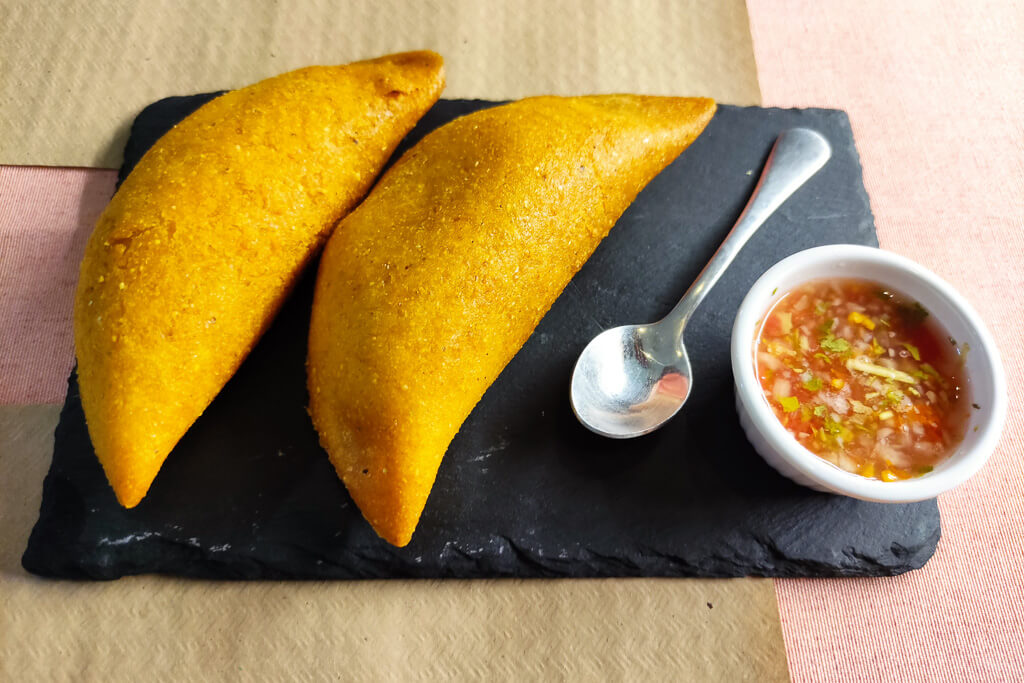
The empanada is another Colombian staple practically synonymous with the country. While empanadas are popular throughout Latin America, Colombian empanadas are unique for their cornmeal dough, deep-fried to perfection.
Empanadas come in all shapes and sizes, stuffed with everything from chicken to meat to potatoes. No matter what empanada you choose, make sure to arm it with plenty of salsas. Most empanada stands come with plenty of options, from suero costeño – a cheesy sour cream, to salsa rosada – a sweet mix of mayo and ketchup.
My favorites are empanadas de chicharrón, filled with the aforementioned thick-cut, deep-fried pork belly. They’re a rarity, but if you find them they’re a must try! The best empanada de chicharrón I ever had was at the night market in the town of Guatapé — keep your eyes peeled if you visit!
10. Pandebono
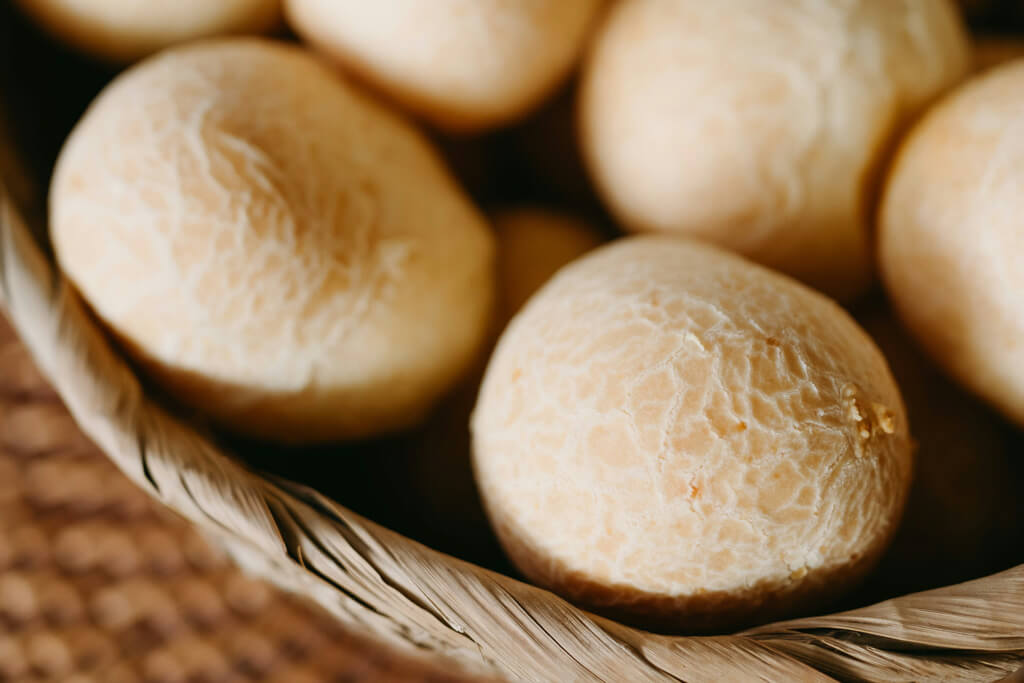
Colombians love cheese, and this is perhaps no more obvious than in Pandebono. This fluffy, cheesy bread is made from yuca starch, cornmeal, and queso blanco, giving it a chewy and soft texture. Trust me – you won’t be able to eat just one.
Pandebono is served at nearly every panadería you’ll find throughout Colombia, though I recommend arriving early to get the cheese bread straight out of the oven! You’ll most often see the bread served in small balls or ring-shaped – both are equally delicious.
I highly recommend eating your pandebono alongside a cup of tinto or hot chocolate. You won’t be the only one, this is a Colombian breakfast staple!
11. Buñuelos
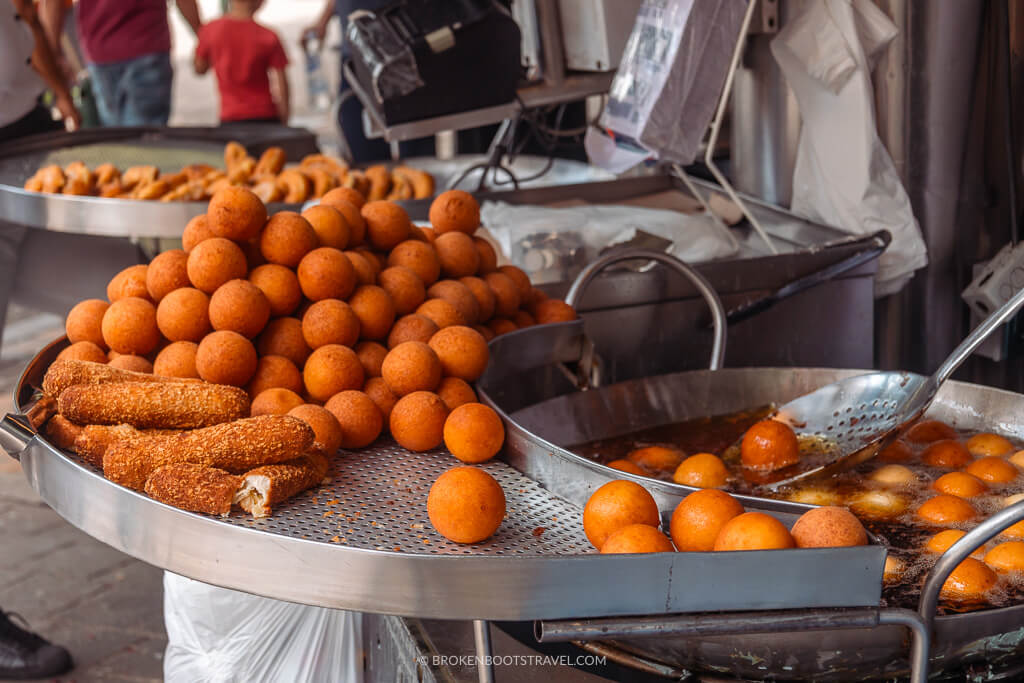
My favorite Colombian treat, buñuelos are the unofficial deep-fried treat of Colombia. Similar in preparation to pandebono – made with yuca flour, corn starch, and queso blanco – these fritters are deep fried and often served hot, giving them a decadent, irresistible flavor.
You’ll often find buñuelos served street-side, fresh out of the deep-fryer. While the dough itself is made with cheese, some buñuelos actually include a melty, cheesy center – my personal favorites.
Buñuelos are a popular treat year-round, but they’re especially associated with Colombian Christmas – you’ll find them on nearly every street corner during the holiday season!
12. Almojábanas
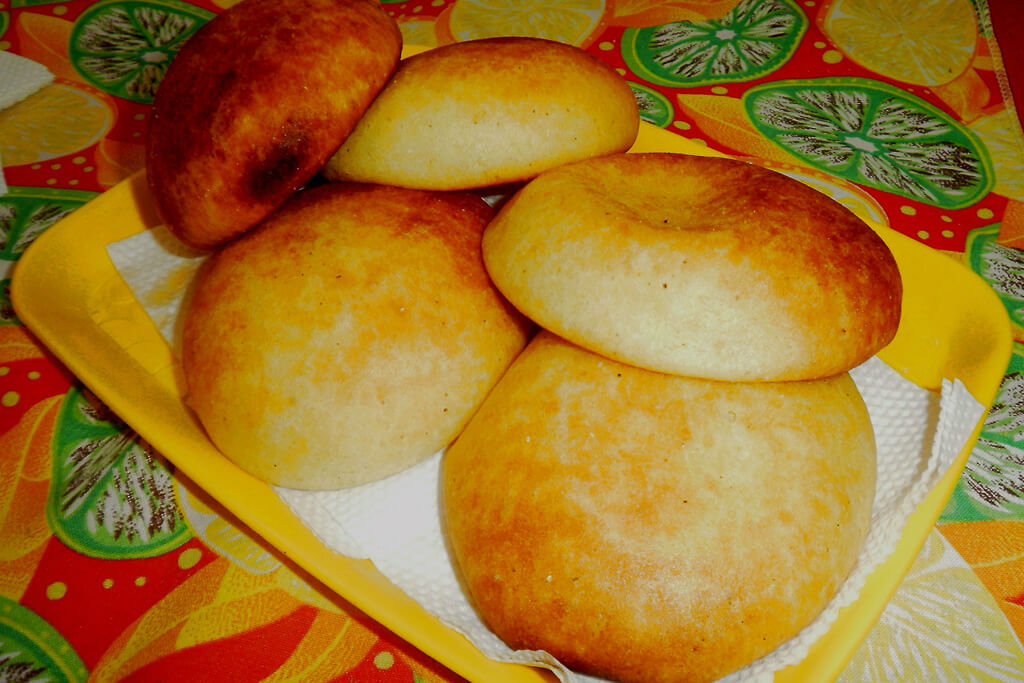
Yet another cheesy Colombian bread, almojábanos differ from the former in that they’re made with a base of corn flour. While they’re still chewy and delicious, they also have a heartier texture that makes them a perfect filling breakfast.
Colombians don’t come for me, but I often relate almojábanas to southern cornbread, a dense, cheesy, buttery bread that goes with absolutely everything. Due to the higher level of cornflour, almojábanas also have a sweeter corn flavor.
You’ll find almojábanas at nearly every panadería in Colombia, though best served right out of the oven with a piping cup of coffee!
13. Deditos de Queso
Literally translating to “cheese fingers,” deditos de queso are another popular cheesy Colombian snack. Made from a long stick of queso blanco wrapped in dough, the deditos are then deep-fried and served hot, often with a side of suero costeño.
Deditos de queso come in all shapes and sizes, from literal finger-sized to the length of your forearm! You’ll sometimes see Colombians eat them alongside a cup of hot chocolate – even dunking the dedito in the drink!
Deditos de queso are sometimes also called palitos de queso – don’t worry, they’re the same snack!
14. Carimañola
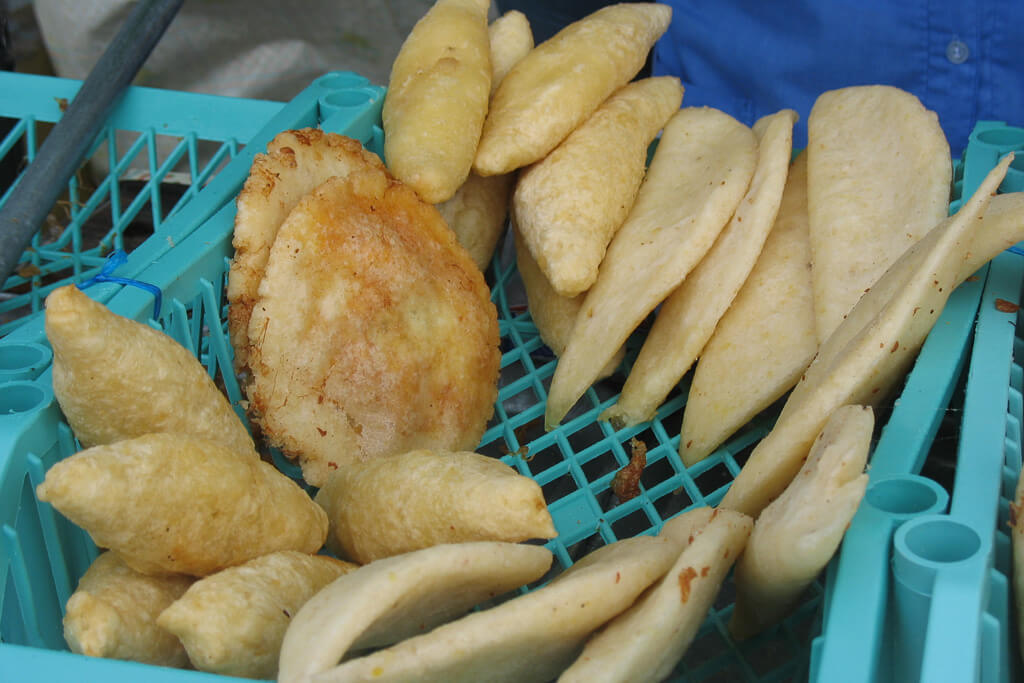
One of my favorite street foods from the Colombian coast, carimañolas are yuca fritters stuffed with meat or cheese. The yuca-based flour gives the fritters a deliciously chewy texture, and the salty queso costeño gives the snack a distinct flavor from other cheese-based snacks in the country.
Carimañolas are also often found stuffed with meat, often seasoned with peppers, onions, and regional spices. They’re a delicious roadside snack, guaranteed to raise your cholesterol!
The best carimañolas I ever had were in the Plaza Bolivar of Cartagena – if you’re visiting the city, you’ve got to try them!
15. Mango Biche
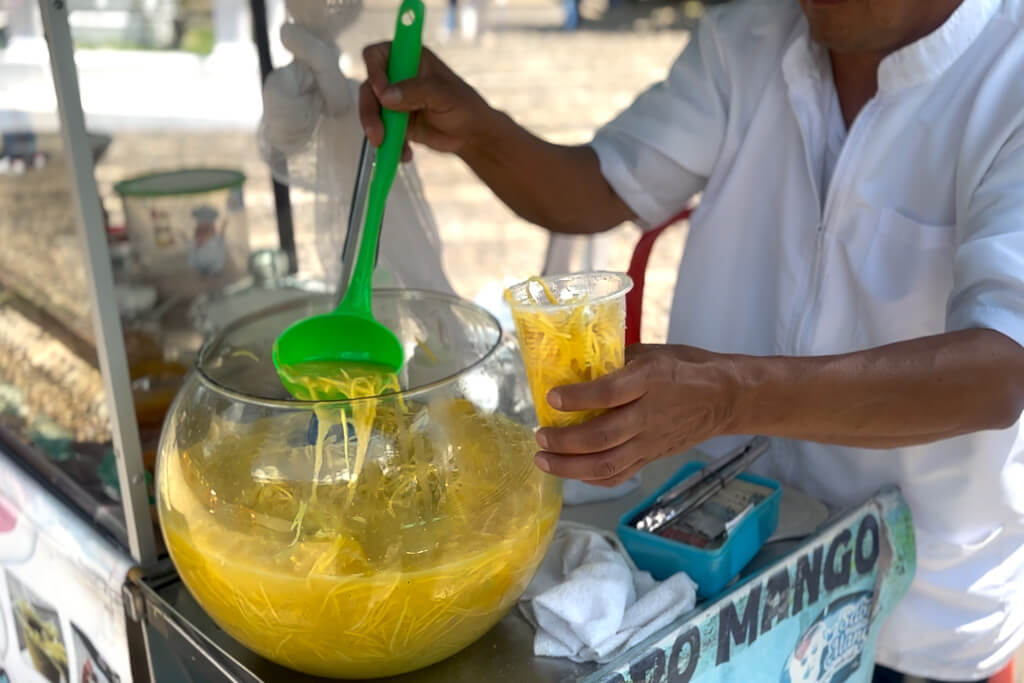
Mango biche is a refreshing streetside snack found all over Colombia. The dish is made of green mango, flavored with a pinch of salt and a dash of lime juice. You’ll find the mango served in different formats – sometimes sliced thin, other times served in cubes. Occasionally, you’ll even be handed a whole green mango, sliced with the seasonings added right on top!
Mango biche is also often served with a pinch of chili pepper for a unique flavor. Most vendors add the topping in front of you, so you can customize it as you like. I often ask the vendor to add a little extra lime juice, I like my mango biche extra tangy!
16. Patacón
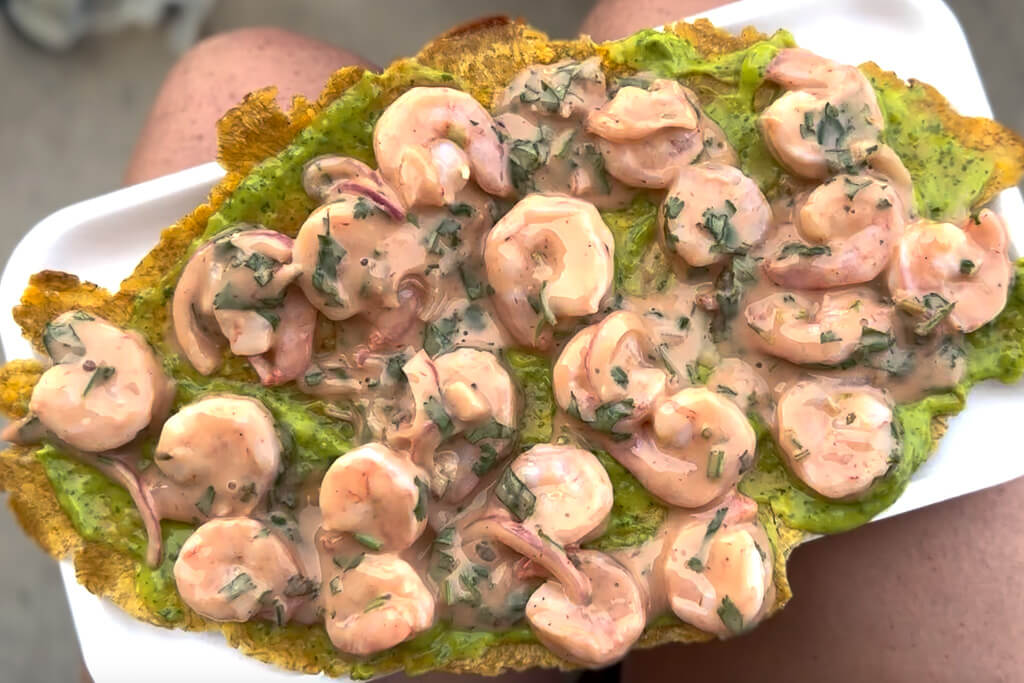
A crispy, deep-fried green plantain, patacónes are often served with a variety of toppings, though they’re also delicious on their own. Originating from the Colombian coast, you’ll find patacónes served at nearly every streetside stand on the costa caribe.
To make patacónes, the plantains are first smashed thin and then deep-fried. The resulting texture is almost like a chip, making it a perfect base for a variety of dishes. On the coast, you’ll often find patacónes served with seafood, or even ceviche on top. In the coffee region, it’s more common to find patacónes served alongside one of the many trout-based dishes of the region.
The best patacónes I ever had were from a streetside stand in Capurganá, Colombia. Topped with baby shrimp, sliced shallots, and a citrus-based sauce, I still dream of it to this day. Plus, it didn’t hurt to eat the dish right by the Caribbean Sea!
Colombian Stews and Soups
Colombians love their soup. It doesn’t matter if the temperatures outside have you melting – soup remains a staple part of every meal. It’s common to find soup as a starter in lunch menus, though some Colombian soups are hearty enough they’re considered a dish all on their own. Here are a few traditional Colombian soups you have to try.
16. Mondongo
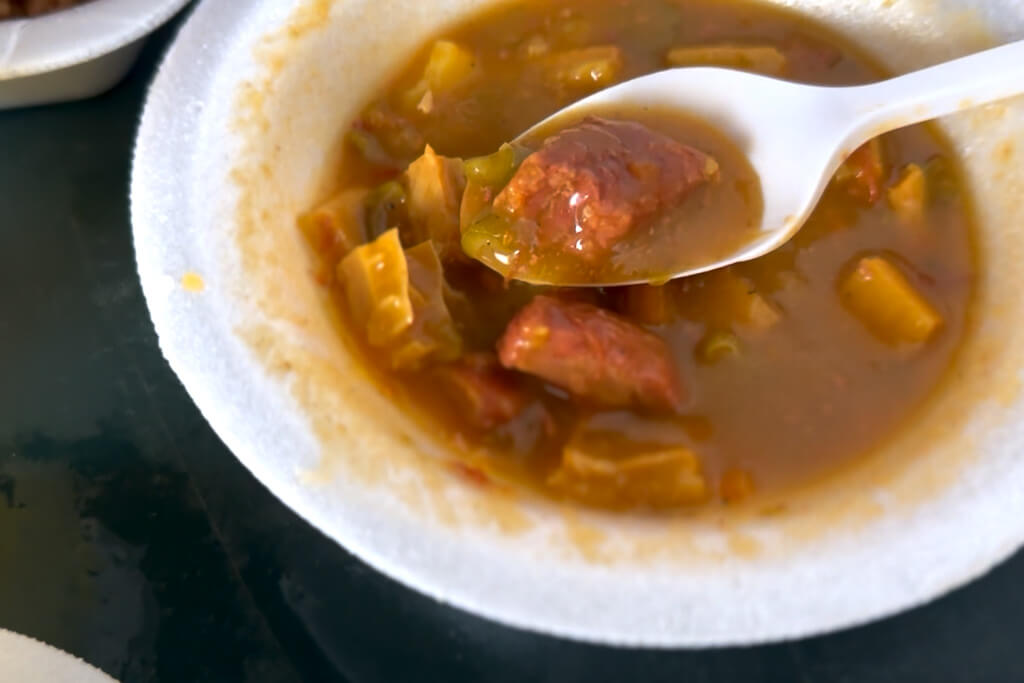
Mondongo is a hearty, meaty soup made with beef tripe, pork, and chorizo. The soup is then substantiated with a hearty starch, often yuca and potatoes, and seasoned with lime and cilantro. In case you’re unfamiliar, tripe is the lining of a cow’s stomach – sounds a little out there, but don’t knock it until you try it!
The dish is considered a meal in and of itself, often served as a main dish at restaurants. You’ll often find it served with some Colombian staples – a side of white rice, a small salad, and a fried plantain.
Quite frankly, I was a little nervous the first time I tried Mondongo. I was in a hole-in-the-wall restaurant in the department of Chocó’s capital city of Quibdo, which a friend assured me was the best mondongo in the city. And he was right – these days I’m a total mondongo convert!
Curious about more afrocolombian flavors? Check out my guide to the city of Quibdó, as well as my visit to the San Pacho Festival, the biggest afrocolombian heritage festival in the country!
17. Mute Santandereano
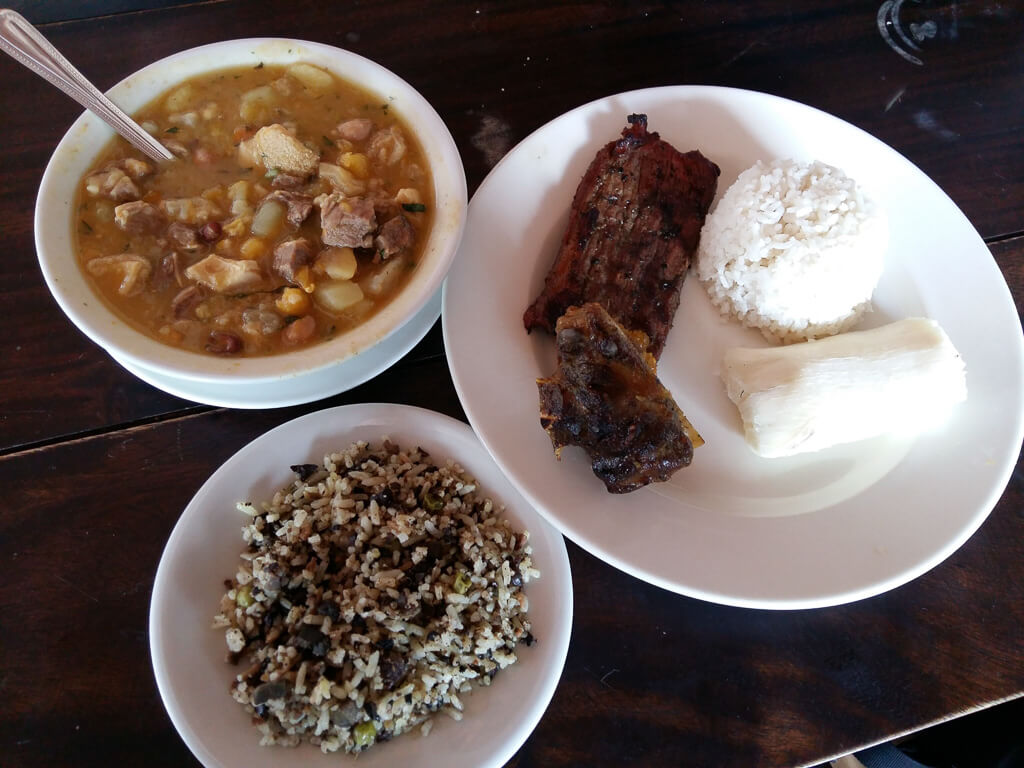
Mute Santandereano is one of the heartiest soups you’ll find in Colombia, originating from the department of Santander. The ingredient list goes on and on – beef, pork, tripe, potatoes, chickpeas, beans, corn, pumpkin, and carrots, seasoned with onions and garlic.
You’ll find varieties of the soup throughout the region, sometimes omitting certain ingredients. Other times you’ll find rice served within the soup – as if it wasn’t already hearty enough!
It’s easy to find mute santandereano served at almost any restaurant in the region, though the dish has growing popularity throughout the country as well. Especially in major cities like Medellín and Bogotá you’ll find many varieties of the dish served at a number of restaurants.
18. Mote de Queso
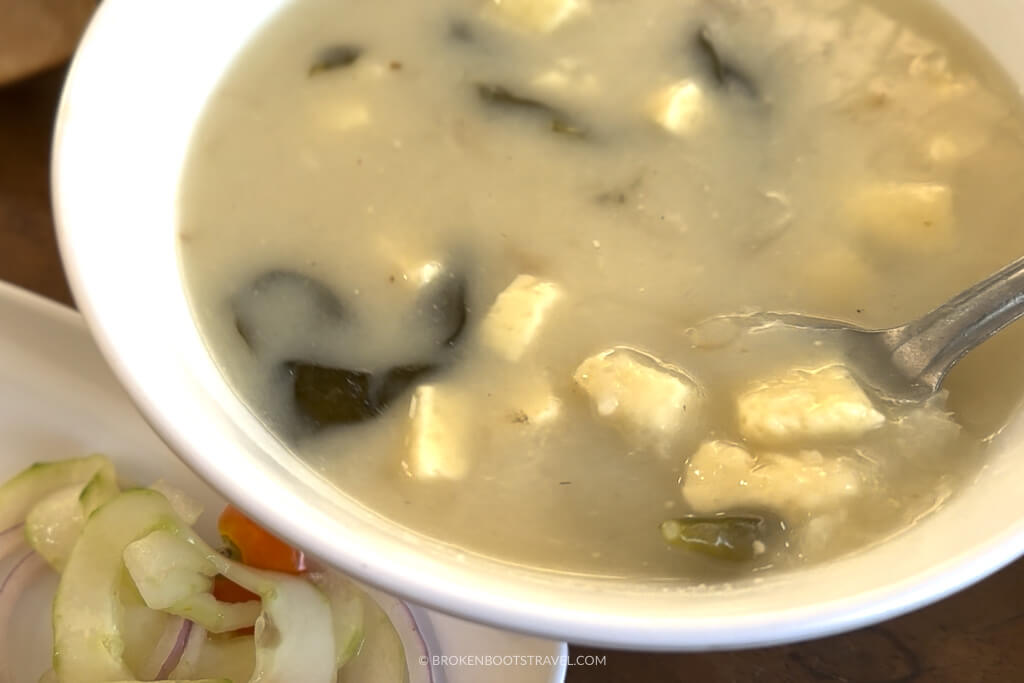
Moté de Queso is a hearty, yam and cheese-based soup from Colombia’s coastal region. The soup is then seasoned with the leaves of bleo de chupa, a cactus originating from the region that gives the soup a distinct flavor.
The dish originates from the department of Sucre, in the agricultural region of the Colombian coast, and utilizes queso costeño in its production. This cheese has a more acidic and saltier flavor than other cheeses throughout the country, which gives the soup a unique richness.
I could probably eat mote de queso for every meal – it’s definitely my favorite Colombian soup. It’s a little difficult to find outside the Atlantic coast, but worth a try if you can find it!
19. Changua
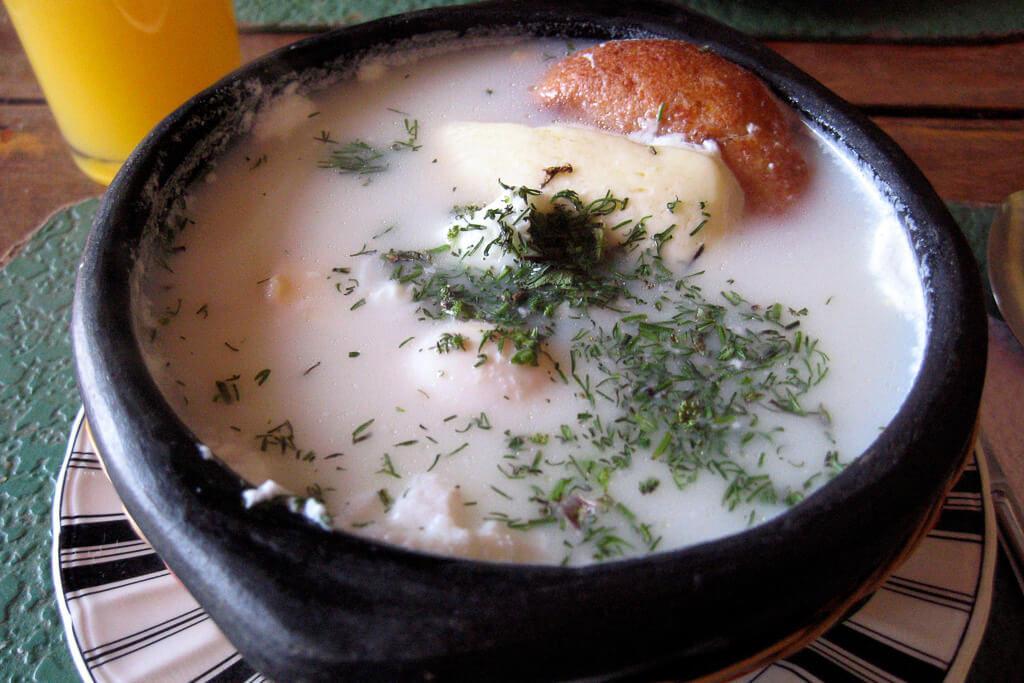
Changua is a Colombian breakfast soup, made with a base of milk and water with the addition of poached eggs, cilantro, and green onions. It’s common to add a slice of toasted bread to the bowl, which absorbs the soup as you eat.
While the soup is simple in preparation, it’s a comforting, hearty breakfast most often enjoyed in the colder Andean regions of the country. The dish is almost synonymous with the capital city of Bogota, though these days you’ll find it as a staple on many breakfast menus across the country. It’s also popular throughout the department of Cundinamarca, a great dish to warm up for a day trip from Bogotá!
Visiting Bogotá? Check out this guided food tour of the city’s quintessential flavors!
20. Cazuela de Mariscos
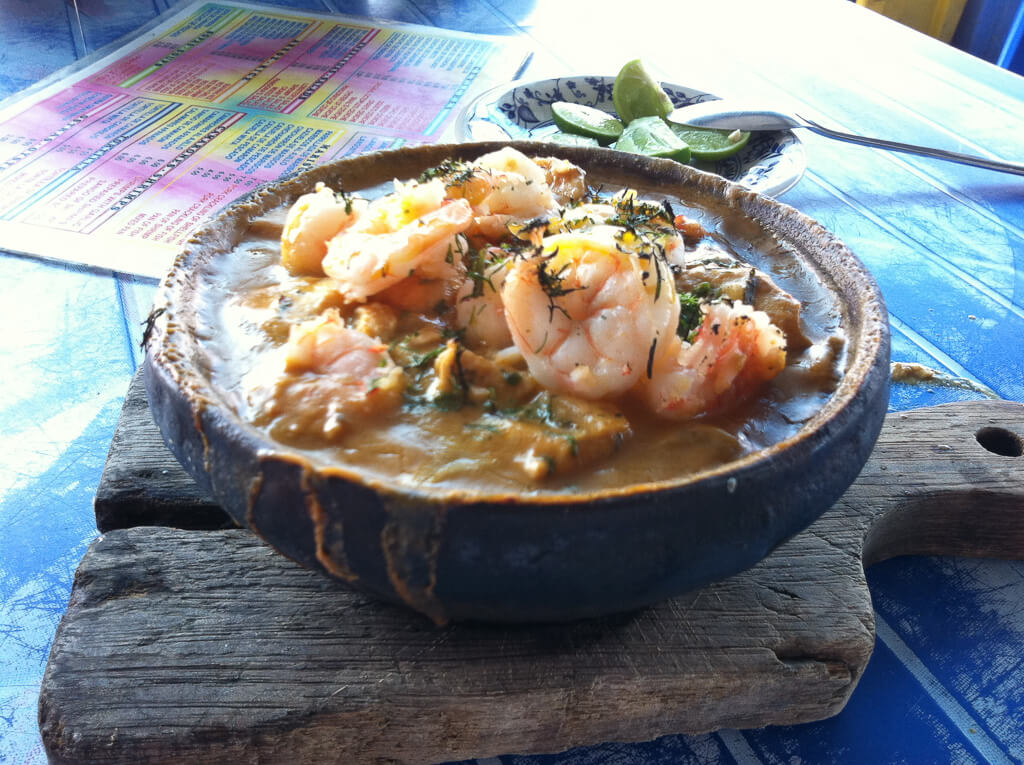
Cazuela de Mariscos is a seafood lover’s dream, a hearty, shellfish based soup originating from the Colombian Caribbean. The soup is made of a base of fish stock, cream, and coconut milk, though the real stars of the show are shrimp and clams cooked slowly. The soup is often flavored with peppers, carrots, and garlic.
Cazuela de Mariscos is served at nearly every restaurant in the Caribbean region, though it’s also a popular dish on the islands of San Andres and Providencia. The dish is often accompanied with a side of patacónes and coconut rice. The sweetness of the coconut milk is the perfect balance for the seafood, best if topped with a fresh squeeze of lime!
Colombian Desserts and Sweets
Colombians love their sweets, and there are plenty to try throughout the country! In my experience, many Colombian desserts are EXTREMELY sweet, so if you’ve got a sweet tooth you’ll feel right at home. Here are some of the best traditional Colombian desserts you have to try.
21. Arequipe
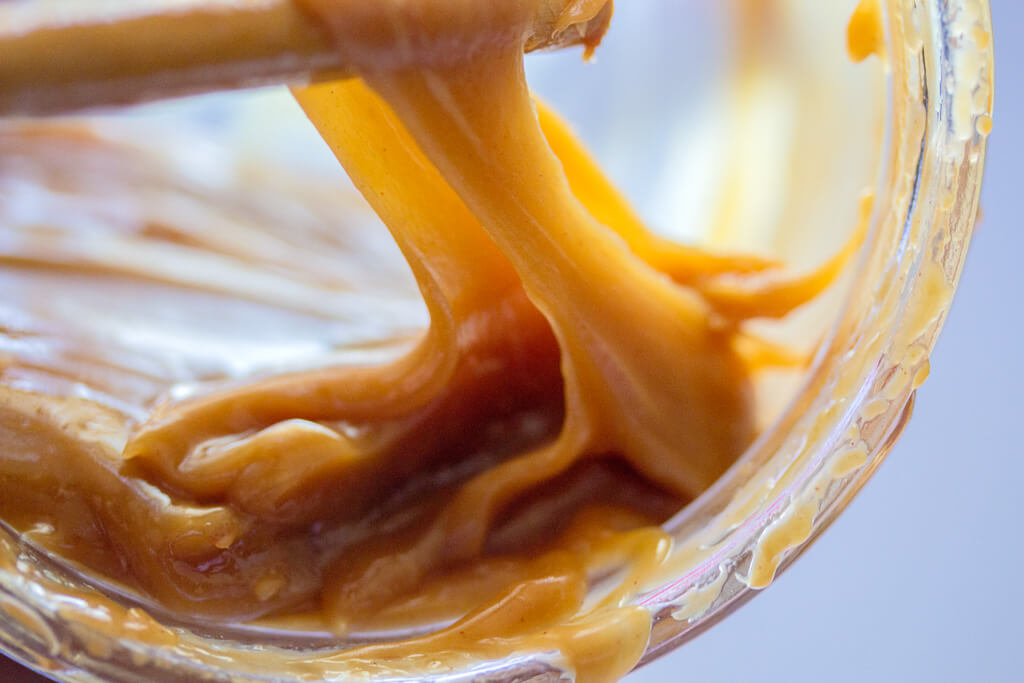
Arequipe is a thick, creamy, caramel spread made from sugar and milk. The dish is everywhere, served on its own or as a popular addition in other Colombian desserts.
While it’s often compared to dulce de leche, Arequipa is distinctly Colombian. You’ll find variations of the dish throughout the country depending on the region, flavored with everything from coffee to coconut, but the traditional arequipe is simple, often made over an open fire. It’s a decadent, rich treat.
I love eating arequipe alongside fresh fruit, like strawberries or apples to balance the richness. You can actually buy arequipe at the grocery store, making it a great snack on the go or a souvenir to bring home!
22. Obleas
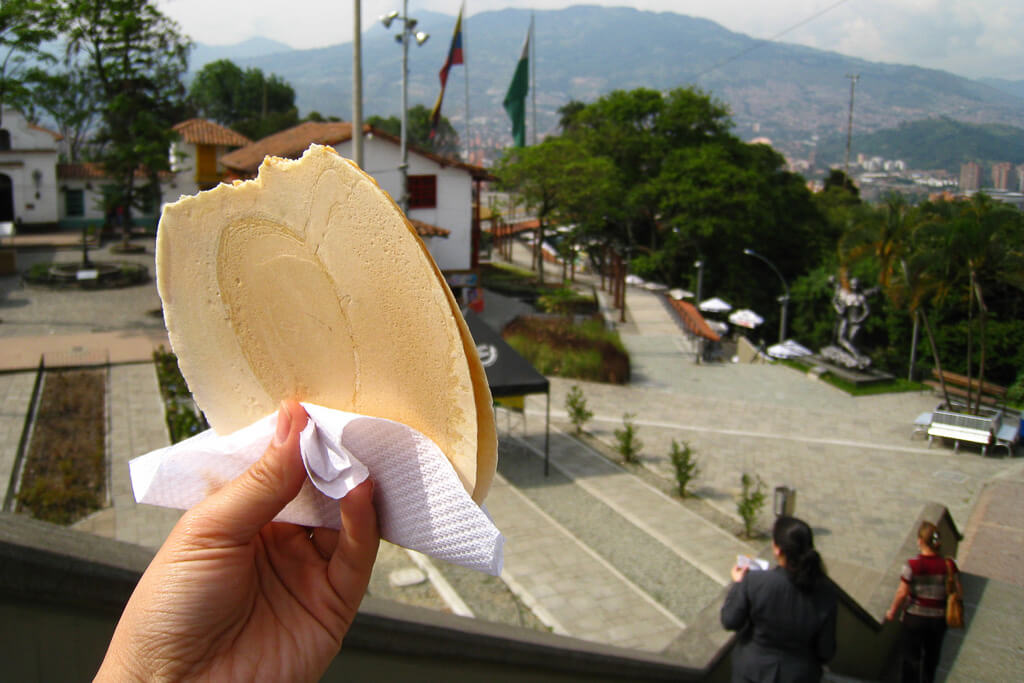
One of the most popular desserts in Colombia, obleas are two wafer cookies filled with everything from arequipe to chocolate to fruit jams. Another popular addition is creamy queso blanco – I was a little surprised the first time I saw it, but it actually adds a delicious creamy flavor!
Obleas are often served streetside and made on the spot. You can ask the vendor to customize your oblea as you like it – so you can omit the cheese if you want!
Other popular fillings for obleas include sweetened condensed milk, guava paste, and shredded coconut. I love the classic – arequipa with fruit jam and cheese!
23. Fresas con Crema
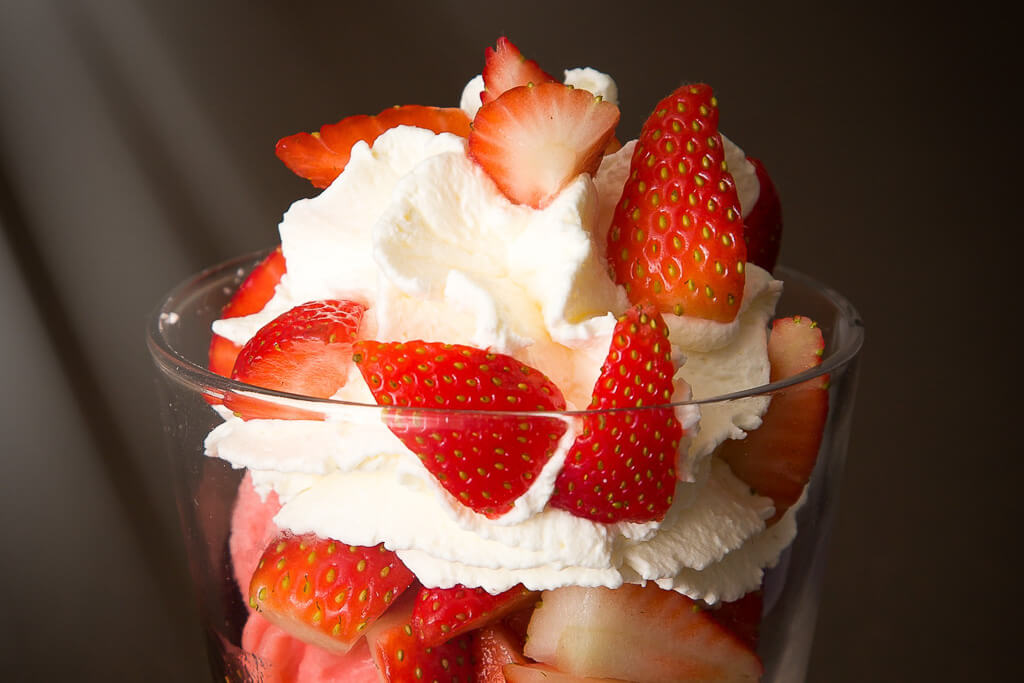
Fresas con crema, or strawberries with cream, is as simple as it sounds – fresh strawberries served alongside heavy whipped cream. It’s a refreshing, sweet treat perfect for a snack or dessert!
But Colombians are nothing if not creative with their desserts, so you’ll find many variations of fresas con crema at roadside stands. Besides whipped cream, you’ll often have the option to add various cereales, sweetened condensed milk, chocolate sauce, and even ice cream to the mix. The dish is often prepared on the spot, so you have the option to customize it as you please.
24. Salpicón
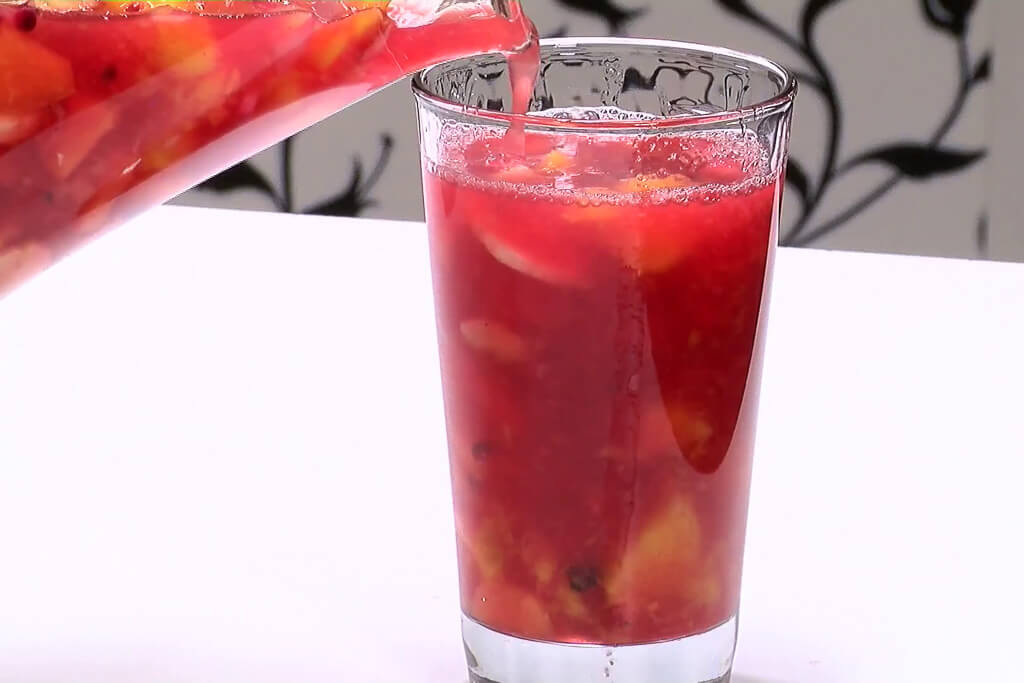
Salpicón is one of the most refreshing desserts in Colombia – a fruity cocktail including a number of tropical treats, from papaya to mango to grapes. The fruits are mixed with a liquid base, usually fresh juice or soda.
The base is often left to mix for a while, enhancing the flavor. Occasionally when the salpicón is served, toppings are added, including sweetened condensed milk, ice cream, or whipped cream.
Salpicón actually means “hodgepodge” in Spanish, which refers to the mix of fruit! It’s definitely a must-try treat while visiting Colombia.
25. Natilla
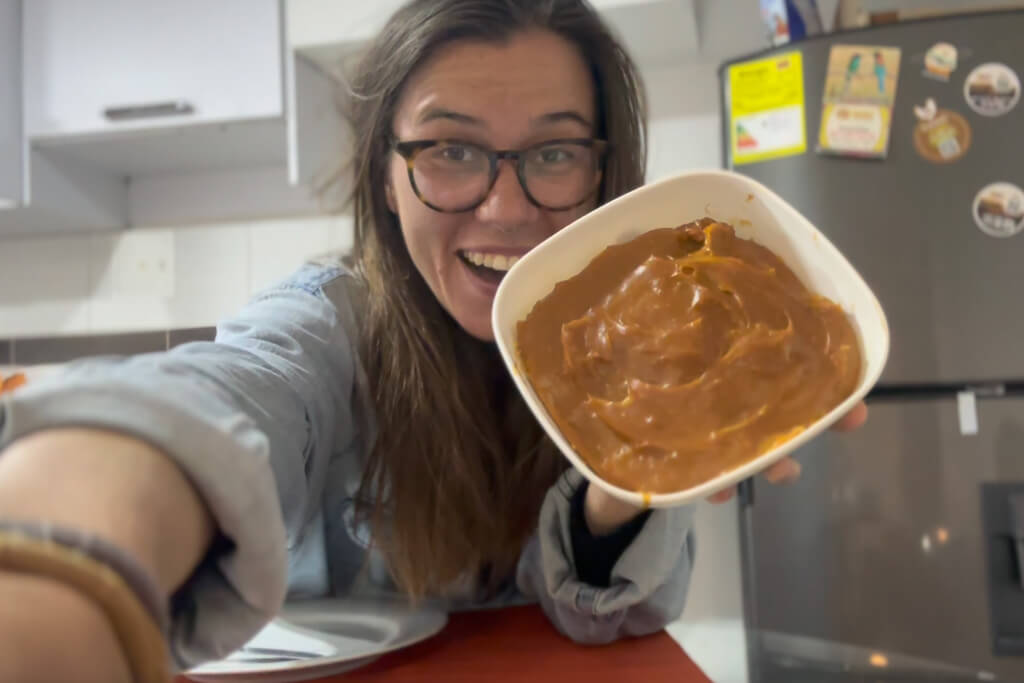
Natilla is a sweet, creamy, gelatinous dessert, often flavored with cinnamon or arequipe. The texture is often compared to that of flan, but it has a distinctly creamier texture that sets it apart.
The dish is traditional made with milk, panela, and cinnamon, though variations include distinct toppings like coconut and raisins. The dish is often associated with Colombian Christmas celebrations, sometimes even with the addition of aguardiente – Colombia’s favorite spirit!
26. Bocadillos
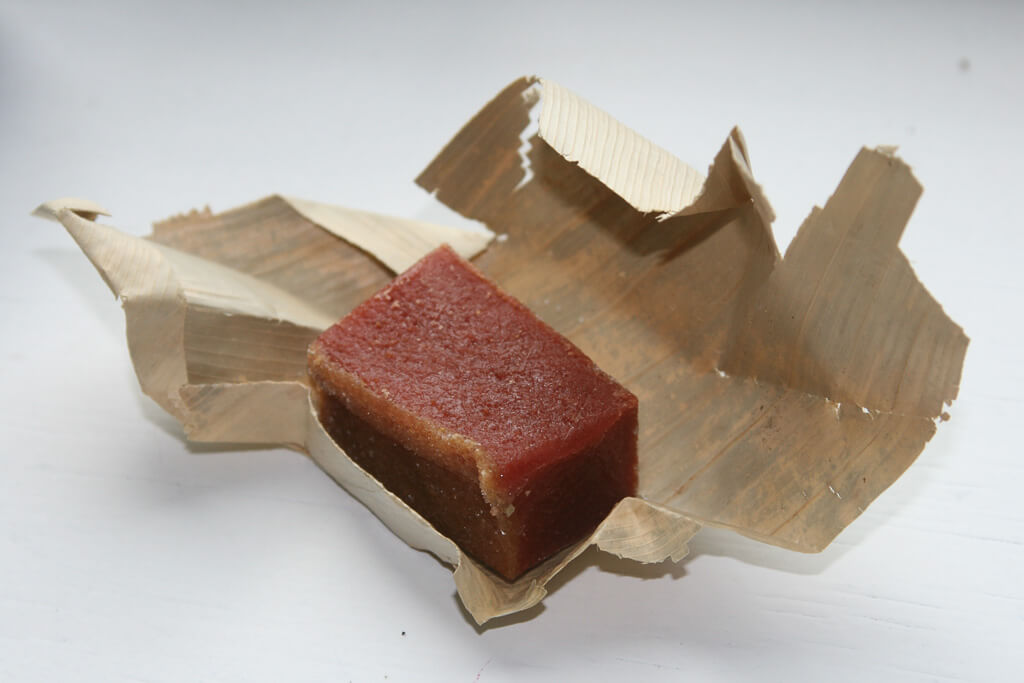
Bocadillos are a traditional Colombian treat made from guava paste, panela, and sugar. The mixture is often formed into a block and wrapped in a dried corn husk, making it an easy sweet to carry along on hikes or day trips. I carried a whole pack with me on my hike to La Ciudad Perdida – Colombians swear they give you energy!
You’ll find bocadillo served in a variety of ways, one of the most common combinations being with cheese! I was a little surprised when I first saw it, but the neutral, creamy cheese actually balances the sweetness of the bocadillo quite well.
Another popular combination is bocadillo and cheese served on top of a platano maduro – a ripe plantain cooked in oil until it’s crispy and caramelized.
Want to try bocadillos at home? Check out this 18-pack on Amazon to get a taste of Colombian flavors before your trip!
Colombian Drinks
While Colombia is certainly known for its coffee, there are plenty of unique drinks to try throughout the country! Here are some of the best Colombian drinks – but don’t worry, I didn’t leave coffee off the list!
27. Tinto
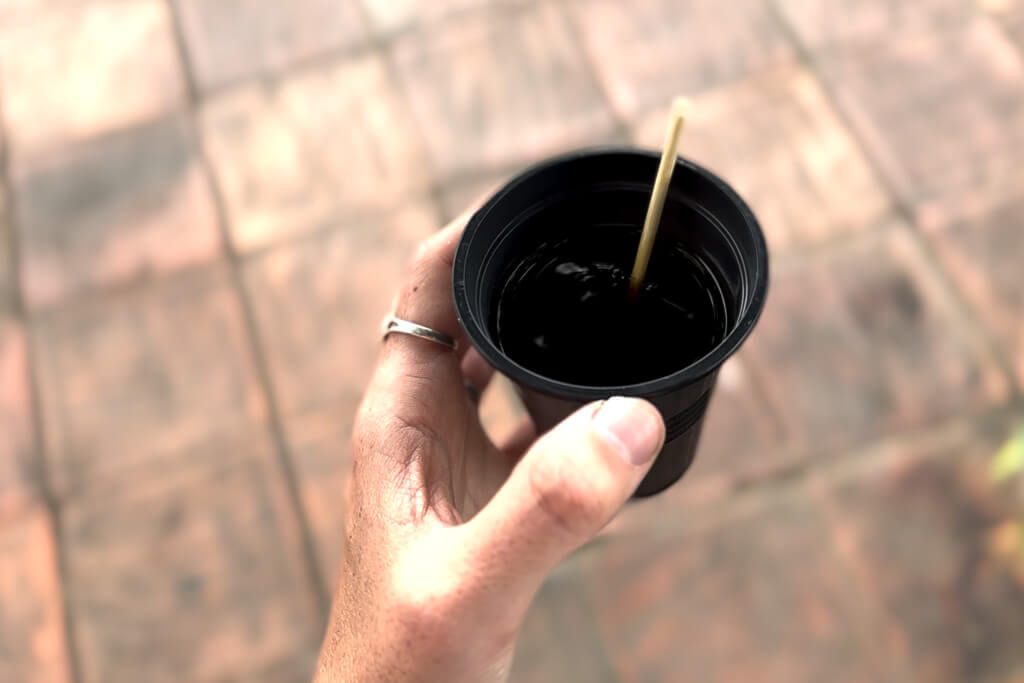
Tinto is a simple, small cup of black coffee, often served with a touch of panela or sugar to give the coffee sweetness. It’s one of the most popular drinks in Colombia, popular amongst locals for its affordability and high caffeine content.
You’ll find tinto on nearly every street corner in Colombia, with some vendors even pushing carts of tinto around town! No matter the time of day, it’s not uncommon to see folks gathered outside of bodegas sipping cups of the strong coffee.
While tinto is certainly not the most luxurious coffee in Colombia, it’s a local staple and a unique way to connect with Colombians across the country!
28. Cafe de Origen
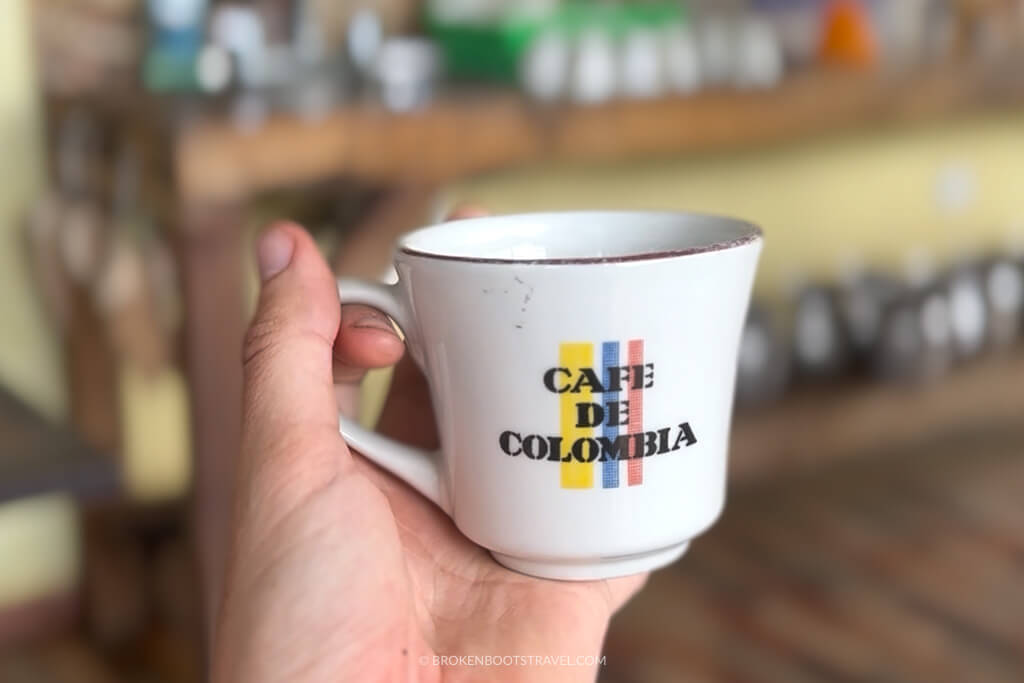
The peak of Colombian coffee, cafe de origin refers to coffee grown on a local coffee farm. You’ll see it sold at coffee shops across the country, sometimes accompanied by a coffee demonstration to show the various coffee preparations.
There are three styles of cafe de origin – lavado, where the coffee fruit is removed and the bean is washed, honey, with the fruit removed by unwashed, and finally natural, where the coffee is processed with the fruit still intact. Each variation has its own distinct flavor, and I highly recommend trying a taste of each while in Colombia. Some shops will even provide a tasting!
If you have time, I highly recommend going on a coffee tour to learn about the different coffee productions and rich history of coffee in Colombia.
Want to sample the variety of Colombian coffee? Check out this coffee-tasting tour in Bogotá!
29. Chocolate Santafereño
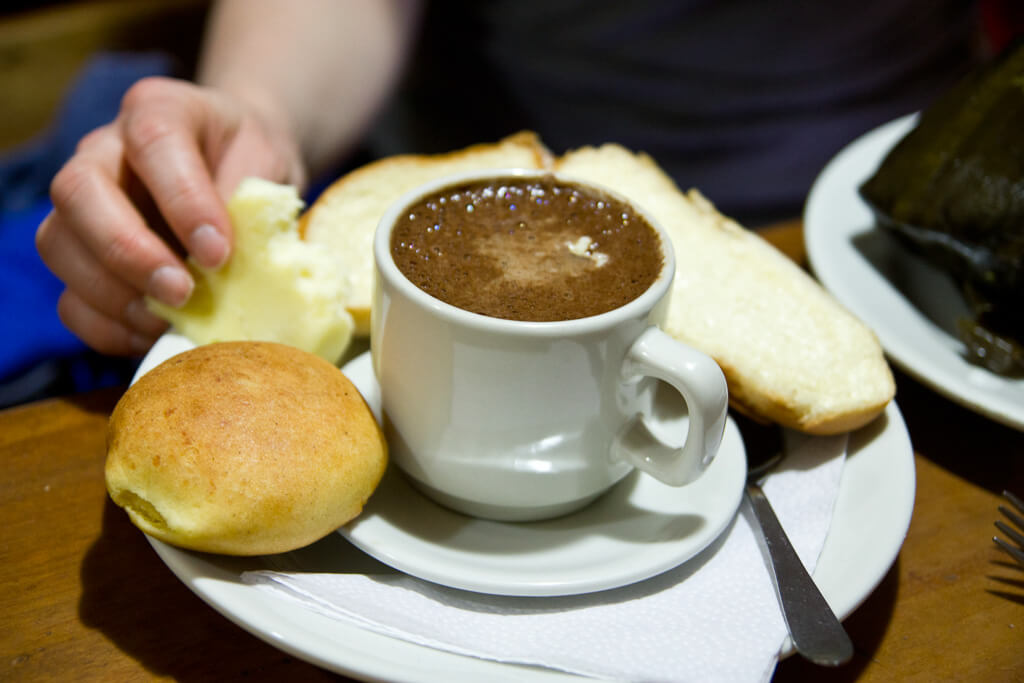
Chocolate Santafereño is a traditional hot chocolate originating from Bogotá, served with chunks of mild white cheese. The cheese is dunked into the hot chocolate, resulting in a stringy, gooey texture.
Colombian hot chocolate is often prepared with a molinillo, or a traditional whisk that gives the drink a frothy texture. The mild cheese actually absorbs the flavor of the chocolate and is quite a nice balance for the sweetness.
I would say chocolate santanfereño is one of the most shocking combinations when I tell my gringo friends – but it’s actually become one of my favorite drinks in Colombia!
30. Chicha
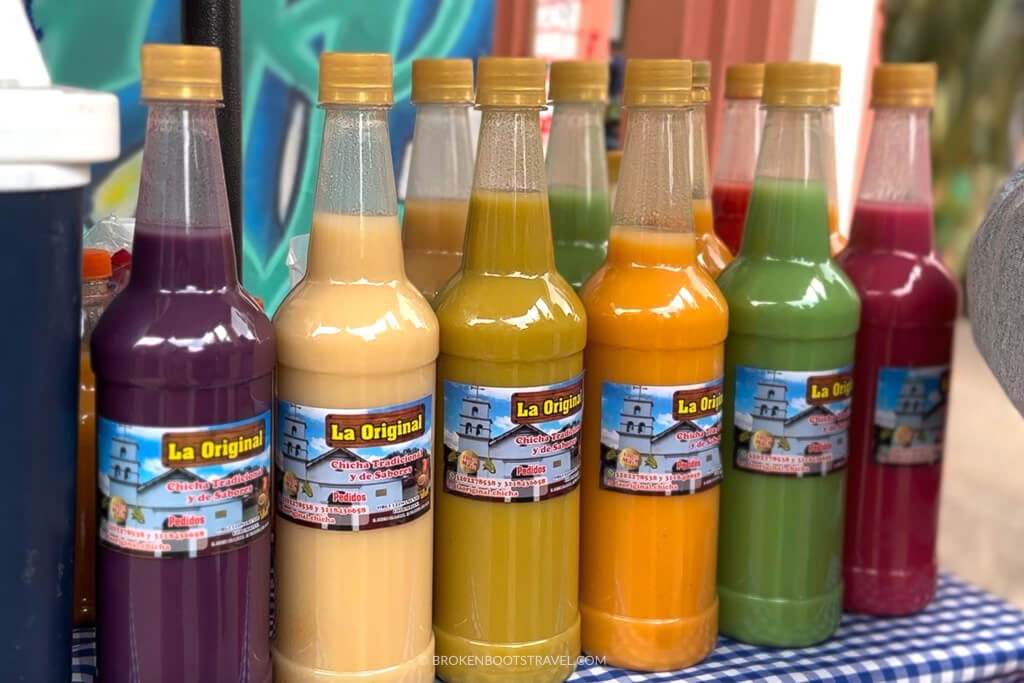
Chica is one of the oldest drinks in Colombia, a fermented corn drink with an acidic taste similar to kombucha. You’ll find chicha made with a number of flavor additions – from pineapple to blackberry to panela!
Chicha actually originates from pre-colonial times. The traditional preparation method involved chewing the corn and then allowing the mixture to ferment. This method of preparation was actually banned in the 19th century due to public health concerns, but chicha continues to be a popular drink made by modern methods.
Due to its fermentation process chicha has a low alcohol content, usually about 1-3% ABV. The best place to try it is in Bogotá at a traditional chichería!
31. Avena
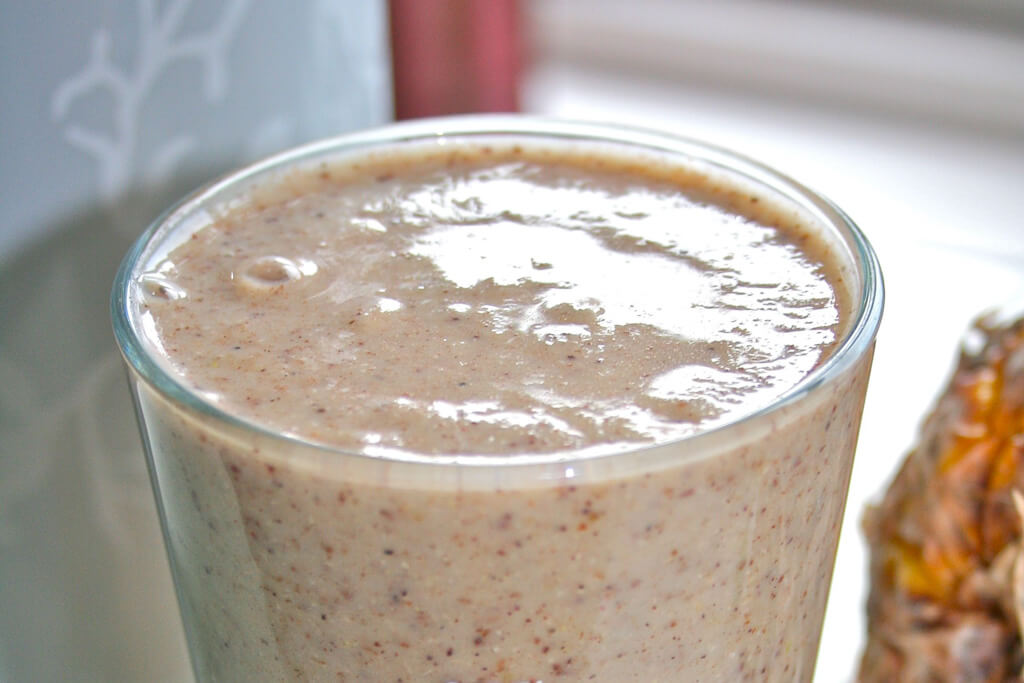
Avena is a popular creamy oatmeal drink, seasoned with cinnamon and cloves. It’s most often served cold and is a popular breakfast drink for its refreshing qualities and subtle sweetness.
The preparation of avena involves blending oats, milk, and water before adding the spices. While you’ll find avena produced on the spot, it’s also one of the most common commercial products in Colombia. It’s not uncommon to spot locals in the street sipping avena from the grocery store!
32. Aguapanela
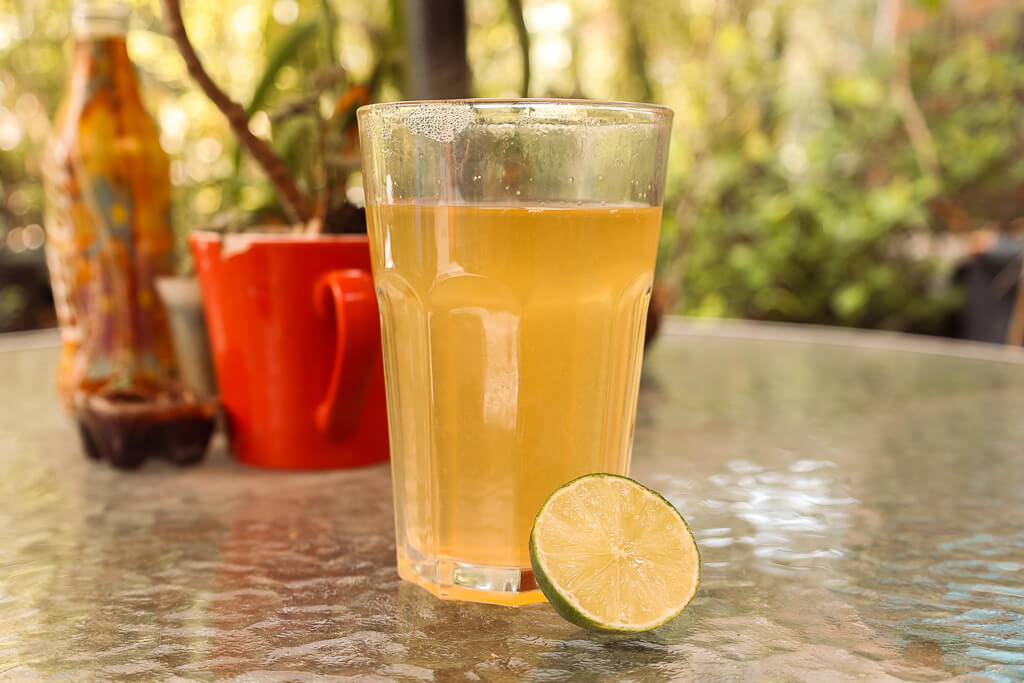
Aguapanela is a staple of Colombian cuisine, a simple drink made by dissolving panela in water. It can be served hot or cold, and is often flavored with a squeeze of lime for acidity.
Colombians swear that aguapanela gives you energy, probably in part to its high sugar content! It’s served everywhere, and goes by different names depending on the region. You’ll often hear it referred to as simply limonada due to the lime added.
Aguapanela is a local favorite throughout Colombia, but the drink actually originates from the Colombian countryside. Its simplicity made it an economic staple during hard work days, and these days its popularity has spread throughout the country.
33. Aguardiente
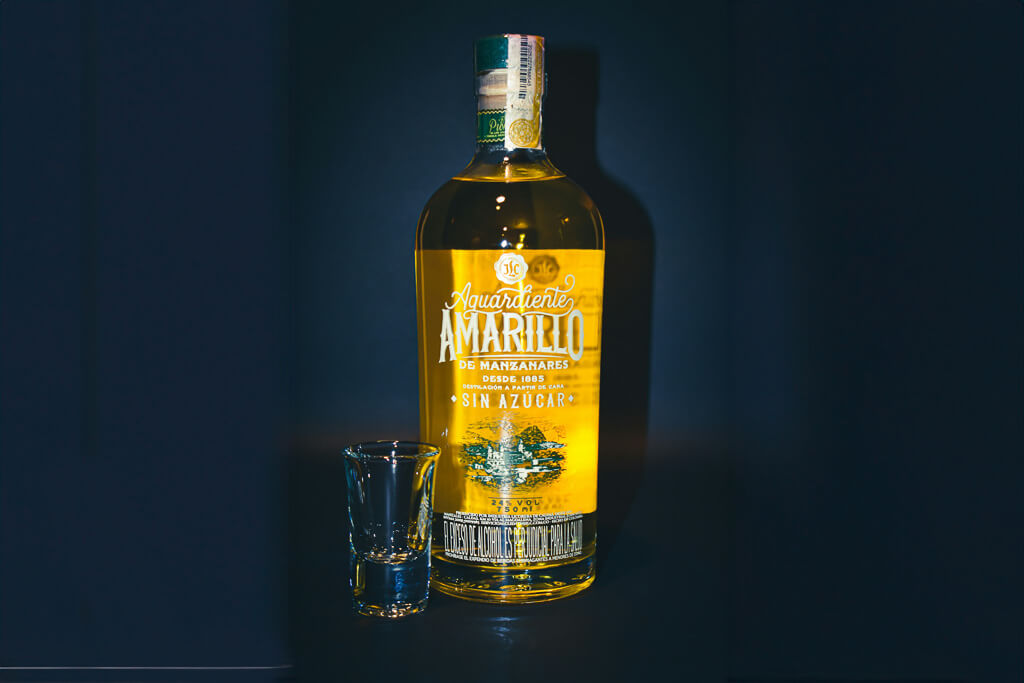
Colombia’s national spirit, Aguardiente literally translates to “fire water,” or “burning water.” The spirit is made from a base of cane sugar, flavored with anise to give it a distinct flavor.
The liquor has a relatively low proof, only about 29%. But it certainly burns going down – not that the locals seem to mind! You’ll see people drinking aguardiente like it’s water, especially around large celebrations.
Aguardiente varies throughout the country, with each region having their own distinct takes on the liquor. One of the most popular labels is Aguardiente Antioqueño – a must try if you’re visiting Medellín and the department of Antioquia!
34. Fresh fruit juice
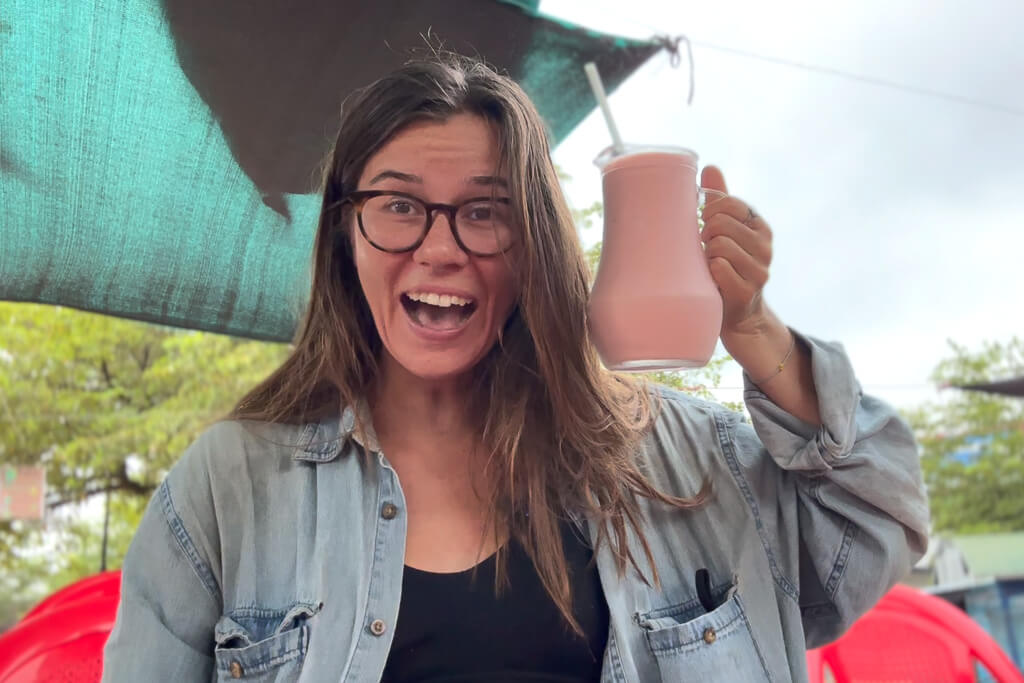
Colombia’s tropical climate makes it a haven for fresh fruit, and natural juice is a popular street snack as a result. You’ll find a variety of juice options – from more well known flavors like pineapple and mango to unique tropical fruits like zapote and guyabano.
It’s common to find juice stalls all over the country, often with the juice prepared right in front of you! The vendor will likely ask you if you want your juice with a base of milk or water. Honestly, I have yet to find a bad combination.
In the department of Cesar, the tiny town of Pailitas is actually notable for its juice production. The central park of the city is filled with juice vendors – many of them women who are victims of conflict in an initiative to create jobs and celebrate the biodiversity of Colombia. Check out this video to see my stop in town!
35. Jugo de Caña
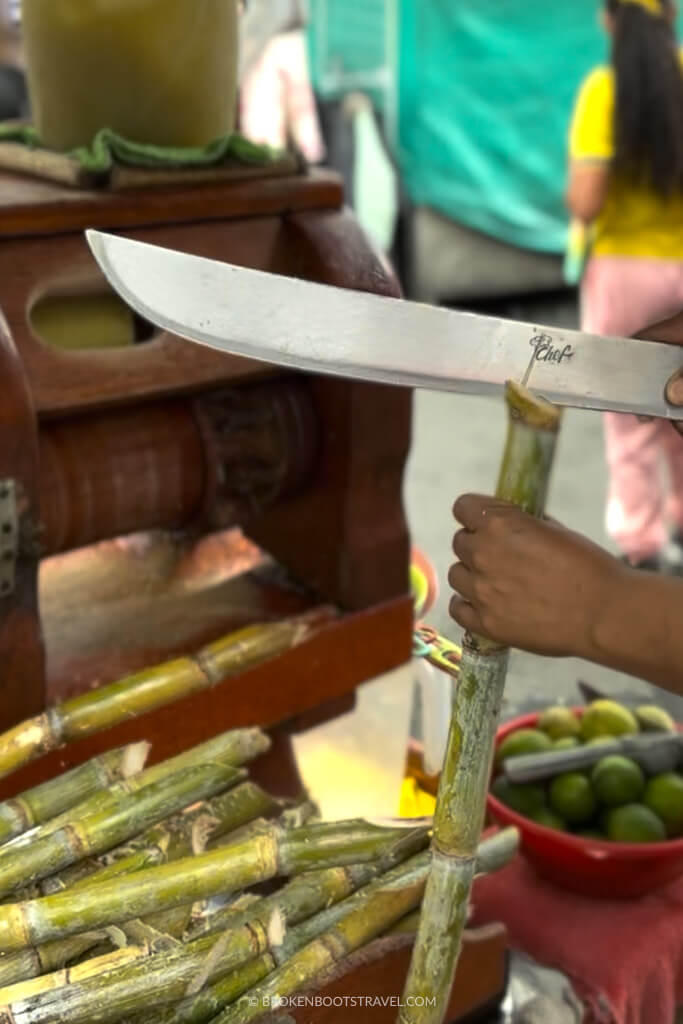
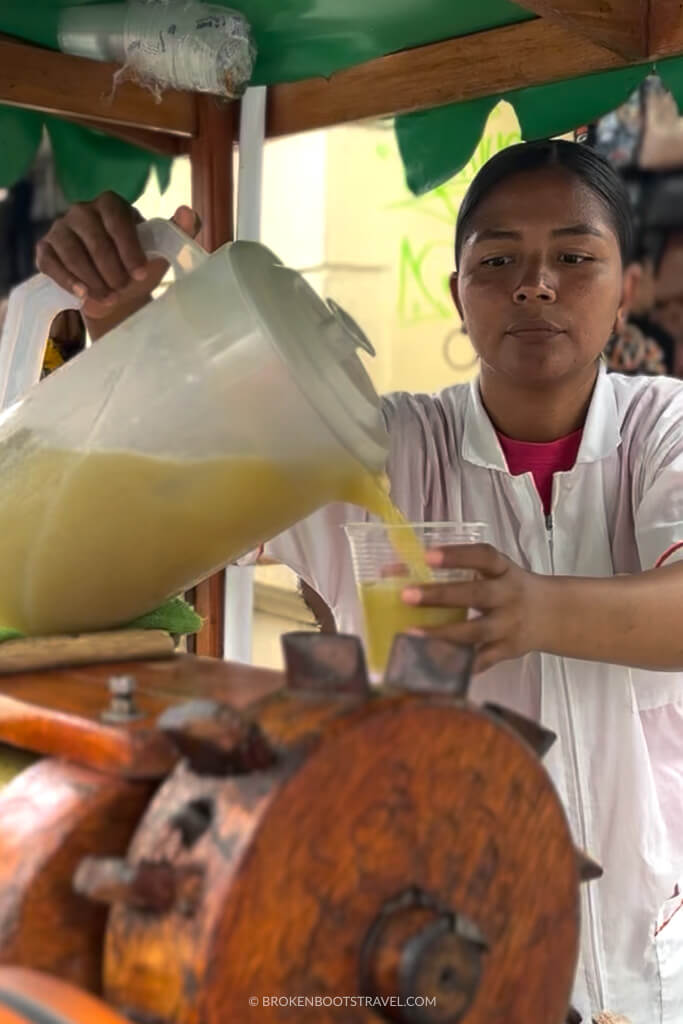
Jugo de Caña is perhaps the sweetest drink in the world, made out of fresh sugar cane. The cane is fed through a machine that presses the plant, extracting the sugar cane juice. The drink is most often served cold with lime, but you can certainly drink it fresh from the cane itself!
You’ll also hear jugo de caña referred to as guarapo depending on the region. However, the drink is popular all over Colombia, served everywhere from restaurants to roadside stalls.
I actually tried jugo de caña for the first time in the city of Cali – the department of Valle de Cauca is one of the largest producers of sugar cane in the country!
Regional Food Breakdown
Curious what foods to focus on in each part of Colombia? Here, I’ll break down some of the best foods by region, so you can experience the best flavors across the country.
Bogotá & the Andean Highlands
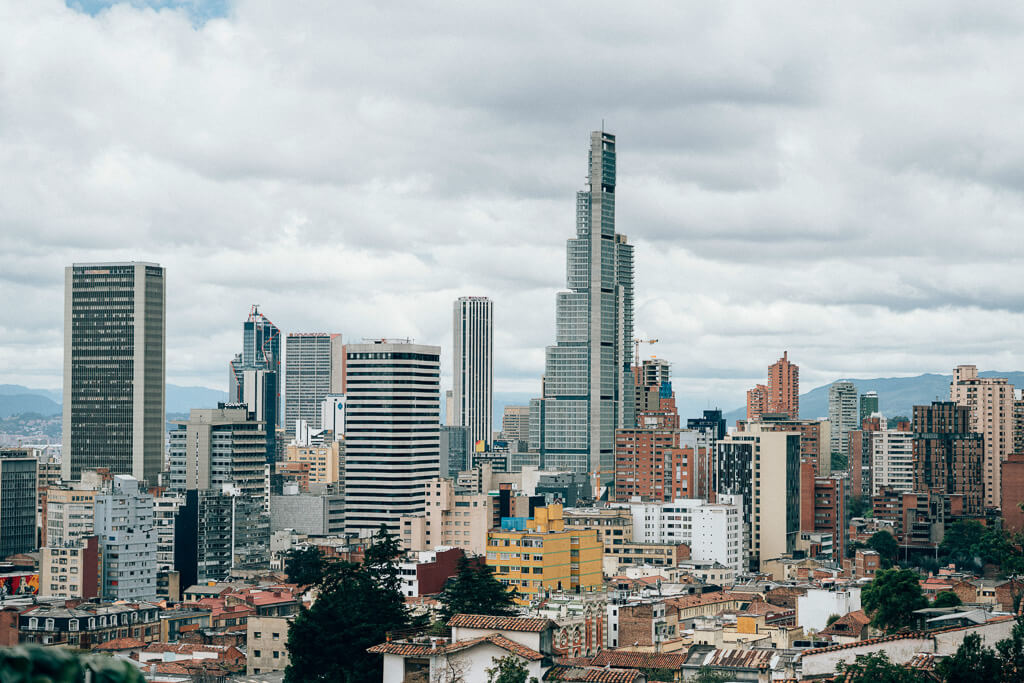
What to Eat in Bogotá: Ajiaco, Changua, Tamales Santafereños, Obleas, Chocolate Santafereño
Markets to Visit in Bogotá: Paloquemao Market (for fresh fruits and vegetables), Mercado de Monserrate (for Colombian street food)
Food Tours in Bogotá:
- Guided Food Tour with 12+ Tastings
- Paloquemao Fruit Market Tour with Breakfast & Hot Chocolate
- Colombian Coffee Tasting Tour
Medellín & Antioquia
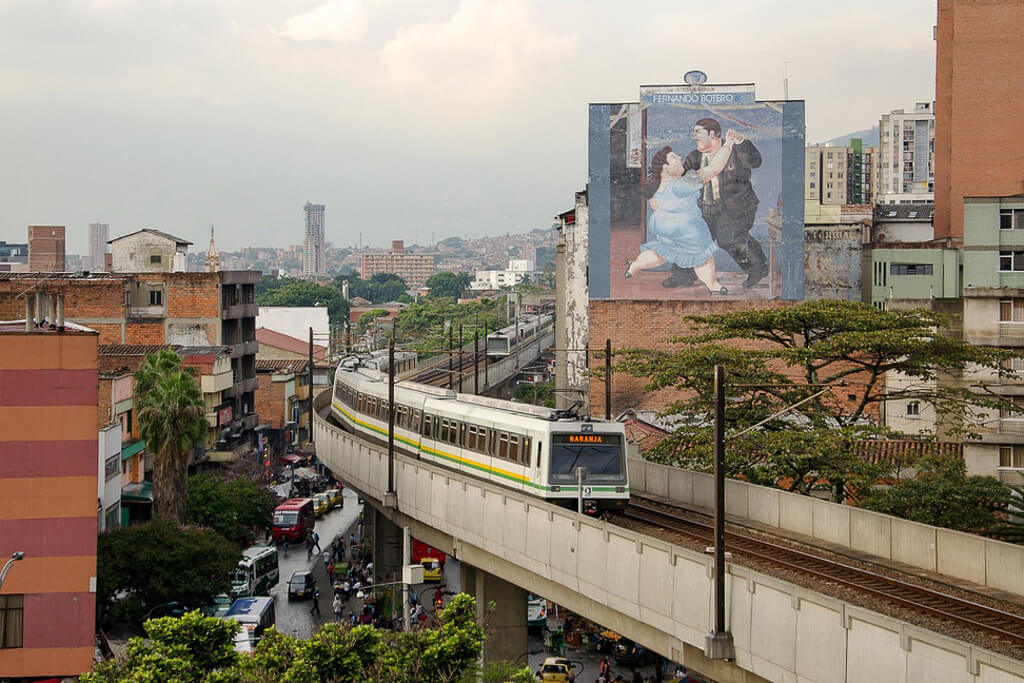
What to Eat in Medellín: Bandeja Paisa, Arepa Antioqueña, Aguardiente Antioqueño, Buñuelos
Markets to Visit in Medellín: Plaza Minorista (for fresh fruits and vegetables), Mercado del Rio (for restaurants serving traditional dishes)
Food Tours in Medellín:
- Medellín Street Food and Poblado Rooftop Tour
- Guided Exotic Fruits Tour in Plaza Minorista
- Medellín Guided Street Food Tour
Visiting Medellín? Check out my guide to the best things to do in the city, or explore the flavors of the region on a day trip from the city! Or check out my 24-hour guide to the city if you’re just passing through!
Cartagena & the Caribbean Coast
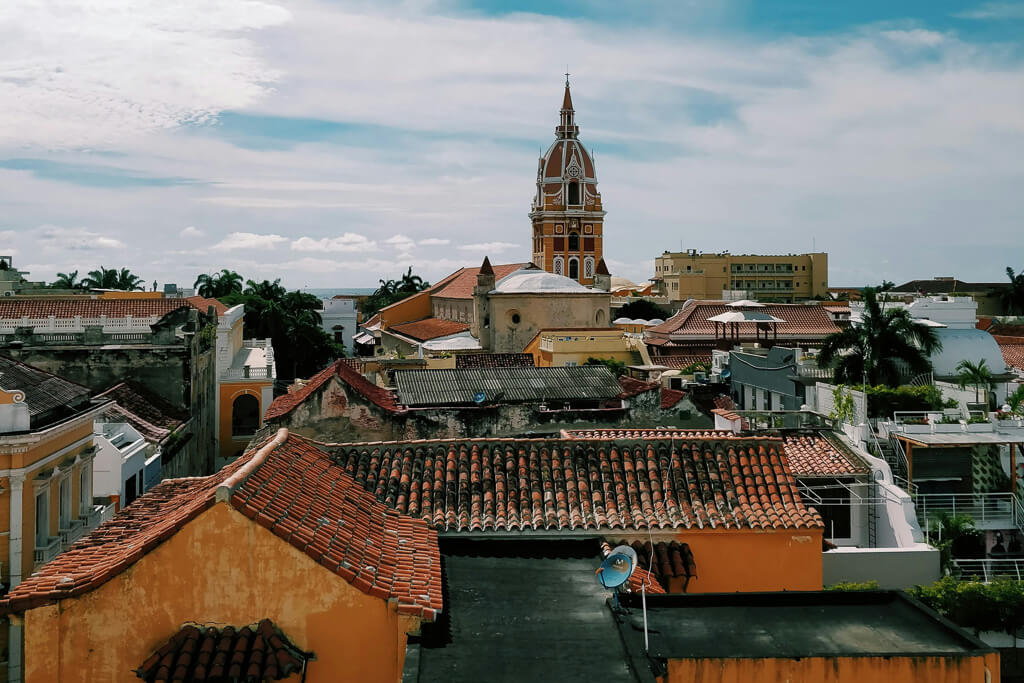
What to Eat in Cartagena: Pescado Frito, Patacón, Carimañola, Cazuela de Mariscos, Arroz de coco
Markets to Visit in Cartagena: Bazurto Market (for fruits, veggies, and traditional dishes), Portal de las Dulces (for traditional coastal sweets)
Food Tours in Cartagena:
- Guided Street Food Tour with Locals
- Food and Coffee Tour in Cartagena Old Town
- Bazurto Market Local Food Tour
Visiting Cartagena? Check out my guide to the best day trips from the city!
Coffee Region (Eje Cafetero)
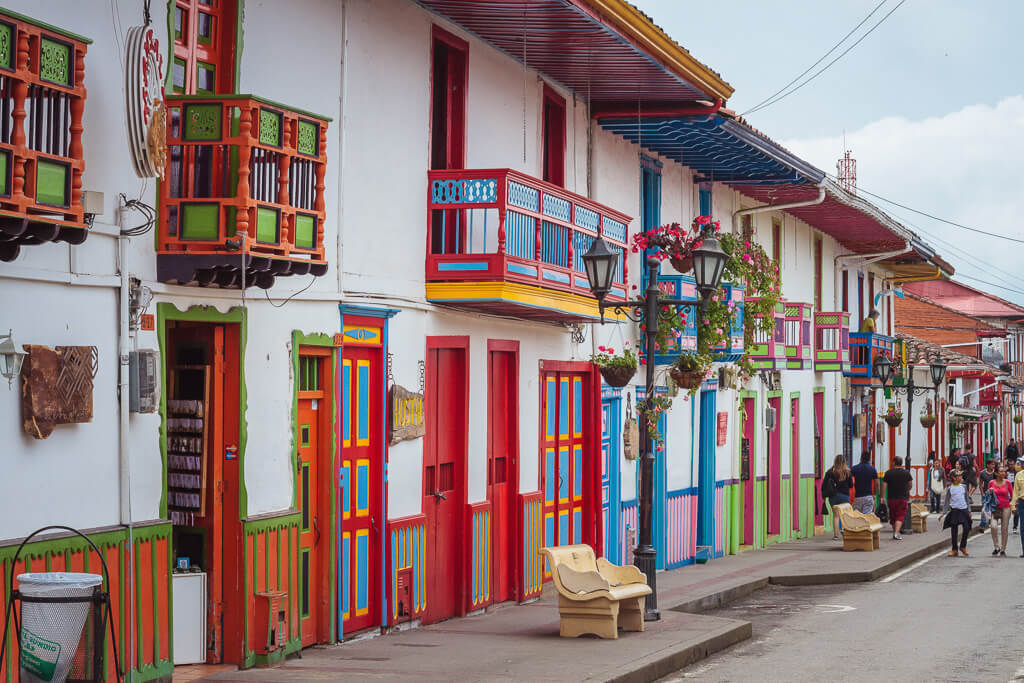
What to Eat in the Coffee Region: Cafe de Origen, Salpicón, Arepa de Choclo, Sancocho, Chorizo santarosano
Markets to Visit in the Coffee Region: Salento Food Hall (local dishes and restaurants), A Coffee Farm (for cafe de origen and coffee-flavored snacks)
Food Tours in the Coffee Region:
- Salento Coffee Tour with Tastings
- Manizales Coffee Tour and Barista Show
- Private Guatapé Tour with Coffee Tour
Enjoying Colombian Flavors
Believe it or not, this guide just scratches the surface of all of the delicious flavors of Colombia – you’ll just have to come and try for yourself!
The biodiversity of Colombia makes for a number of distinct flavors, and the multicultural influences of the country contribute to a creative, unique cuisine. I’ve been truly taken by surprise just how much I’ve fallen in love with Colombian food in my time here – and how I now have the urge to put cheese on everything!
Want to keep exploring Colombia? Check out my guide to the best thing to do in every department of the country, compiled during my travels to all 32 departments! Or check out my safety guide to Colombia to gain a better understanding of the transformation of the country.
No matter where you’re exploring, there’s plenty to see (and to eat!) in Colombia. Buen provecho!
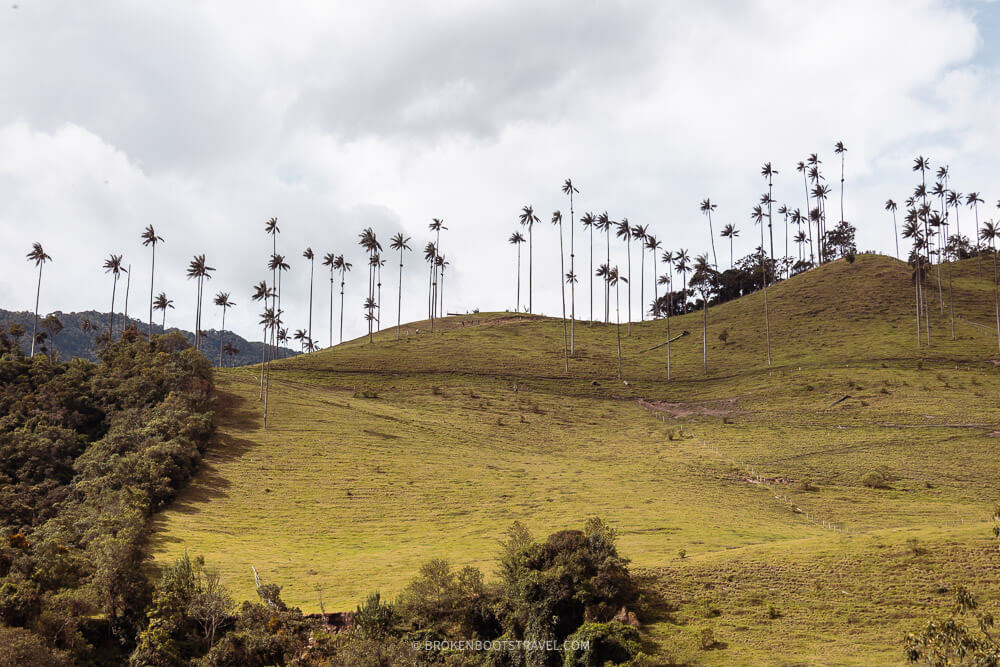
Love stories? Subscribe to my newsletter to get my latest updates delivered straight to your inbox every month. One email a month + no spam? Sign me up!


Virginia Taylor (Ginna) is a travel writer and photographer exploring the world until her boots wear through. She’s currently on a mission to explore all 32 departments of Colombia, though she formerly called the Middle East home. Want to know more? Visit the About Page.